



E-E-A-T SEO: What It Is and How to Build It i...
Read More
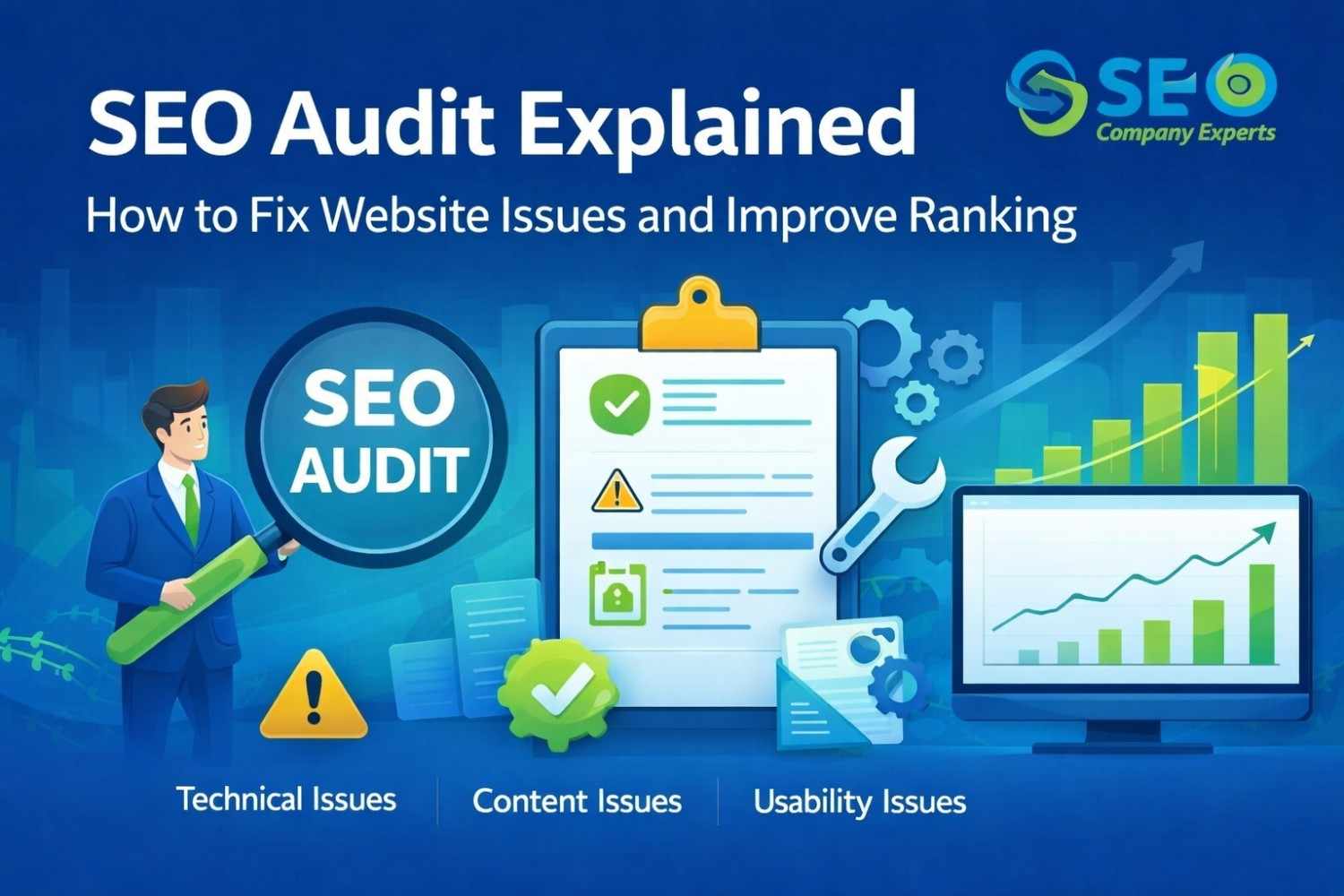
Search engine rankings don’t drop overnight without a reason. In most cases, the cause is a collection of small technical, content, or usability issues that slowly weaken your website’s performance. These issues often go unnoticed until traffic declines or competitors start outranking you. This is exactly where an SEO audit service becomes critical.
This blog provides a complete SEO Audit Explained in a practical and easy-to-understand way. You’ll learn what an SEO audit service is, why it matters, how it works, and how fixing audit issues can directly improve your website’s rankings and organic traffic.
An SEO audit service is a structured evaluation of how well your website complies with search engine best practices. It examines your website from multiple angles technical health, content quality, user experience, and authority to uncover obstacles preventing your pages from ranking higher.
Instead of guessing what’s wrong, an audit provides clarity. It shows you what search engines see when they crawl your website and how users experience it when they land on your pages. The findings are then documented in an SEO audit report, which outlines issues, priorities, and optimization opportunities.
Search engines are constantly evolving. What worked a year ago may no longer be effective today. Websites that fail to adapt often lose visibility, even if their content is valuable.
An SEO Audit Service helps you identify hidden problems that silently affect rankings, such as slow loading pages, broken internal links, indexing errors, or outdated content. It also highlights areas where your competitors may be outperforming you.
Regular audits ensure your website stays technically sound, content-rich, and aligned with modern SEO standards, making it easier for search engines to trust and rank your pages.
Before fixing issues, it’s important to know the areas an audit covers. A complete audit usually combines multiple evaluations into one cohesive analysis.
A typical SEO audit focuses on:
Professional SEO Audit Services usually bundle all these checks into one detailed assessment, ensuring nothing important is missed.
Understanding the audit process helps you take informed action rather than blindly applying fixes.
Search engines must be able to crawl and index your pages to rank them. Many ranking issues stem from pages being blocked, duplicated, or incorrectly indexed.
During this stage, the audit examines whether search engines can properly access your content. Errors in robots.txt, missing sitemaps, or excessive redirects can prevent important pages from appearing in search results.
Common issues checked include:
Fixing crawl and index issues often leads to noticeable ranking improvements.
Page speed is both a ranking factor and a user experience necessity. Slow websites frustrate users and lead to higher bounce rates, which negatively impacts SEO.
The audit evaluates your website’s loading performance across devices and identifies elements slowing it down. Optimizing images, scripts, hosting, and caching can significantly improve performance and engagement.
Performance factors reviewed include:
With mobile-first indexing, search engines primarily assess the mobile version of your website. If your site performs poorly on mobile devices, rankings can suffer even on desktop searches.
The audit checks whether your website adapts seamlessly across screen sizes and provides a smooth mobile experience. Text readability, navigation clarity, and clickable elements are all carefully reviewed.
Mobile usability issues commonly found:
On-page SEO helps search engines understand what your pages are about. Even high-quality content can underperform if on-page elements are poorly optimized.
This part of the audit focuses on improving relevance and clarity while maintaining a natural reading experience, without keyword stuffing. By aligning content structure, headings, and internal signals, Professional SEO Services ensure that each page clearly communicates its core topic. This approach helps search engines understand page intent more accurately while also improving usability and trust for real users.
Key on-page elements reviewed include:
Content is evaluated not just for keywords, but for usefulness, accuracy, and alignment with user intent. Search engines favor pages that fully answer user queries rather than shallow or repetitive content.
The audit identifies content gaps, outdated pages, and duplication issues. It also highlights opportunities to strengthen topical authority through better internal linking and content expansion.
Content-related issues often include:
Improving content quality usually delivers long-term ranking benefits.
A clear site structure helps users navigate easily and allows search engines to understand page relationships. Poor structure often results in important pages being buried too deep.
The audit reviews internal linking patterns to ensure authority flows correctly across your website. Pages with no internal links (orphan pages) are identified and fixed.
Structural improvements typically focus on:
Backlinks act as trust signals for search engines, but not all links are beneficial. Low-quality or spammy links can harm your rankings.
The audit examines your backlink profile to identify risks and opportunities. It also evaluates how your site compares to competitors in terms of authority.
Backlink checks include:
Cleaning up bad links and earning quality ones strengthens domain credibility.
Search engines increasingly measure how users interact with your website. Poor engagement often signals low content quality or usability issues.
The audit reviews user behavior metrics to identify friction points that cause visitors to leave too quickly. Improving UX not only boosts SEO but also conversions.
UX elements commonly evaluated:
A structured Website audit checklist ensures consistency and completeness throughout the audit process. It acts as a reference framework rather than a one-time task list.
A comprehensive checklist typically includes:
All findings from the audit are compiled into a detailed SEO audit report. This document transforms raw data into clear, prioritized actions.
A strong report explains not just what’s wrong, but why it matters and how to fix it. It serves as a roadmap for both immediate fixes and long-term optimization strategies.
Most reports include:
Basic audits can be performed using online tools, but they often miss deeper issues related to structure, intent, and competitive positioning.
Professional SEO Audit Services provide expert analysis, strategic insights, and actionable recommendations tailored to your business goals. They are especially valuable for larger websites, Ecommerce Platforms, or businesses facing ranking drops.
SEO is ongoing, not static. Regular audits help you stay competitive and algorithm-ready.
Recommended frequency:
An SEO audit is the foundation of any successful optimization strategy. This SEO Audit Explained guide shows that improving rankings isn’t about random tweaks—it’s about identifying real issues and fixing them systematically.
By following a structured audit process, relying on a clear website audit checklist, and acting on insights from a detailed SEO audit report, you can remove performance barriers and unlock sustainable organic growth.