




E-E-A-T SEO: What It Is and How to Build It i...
Read More
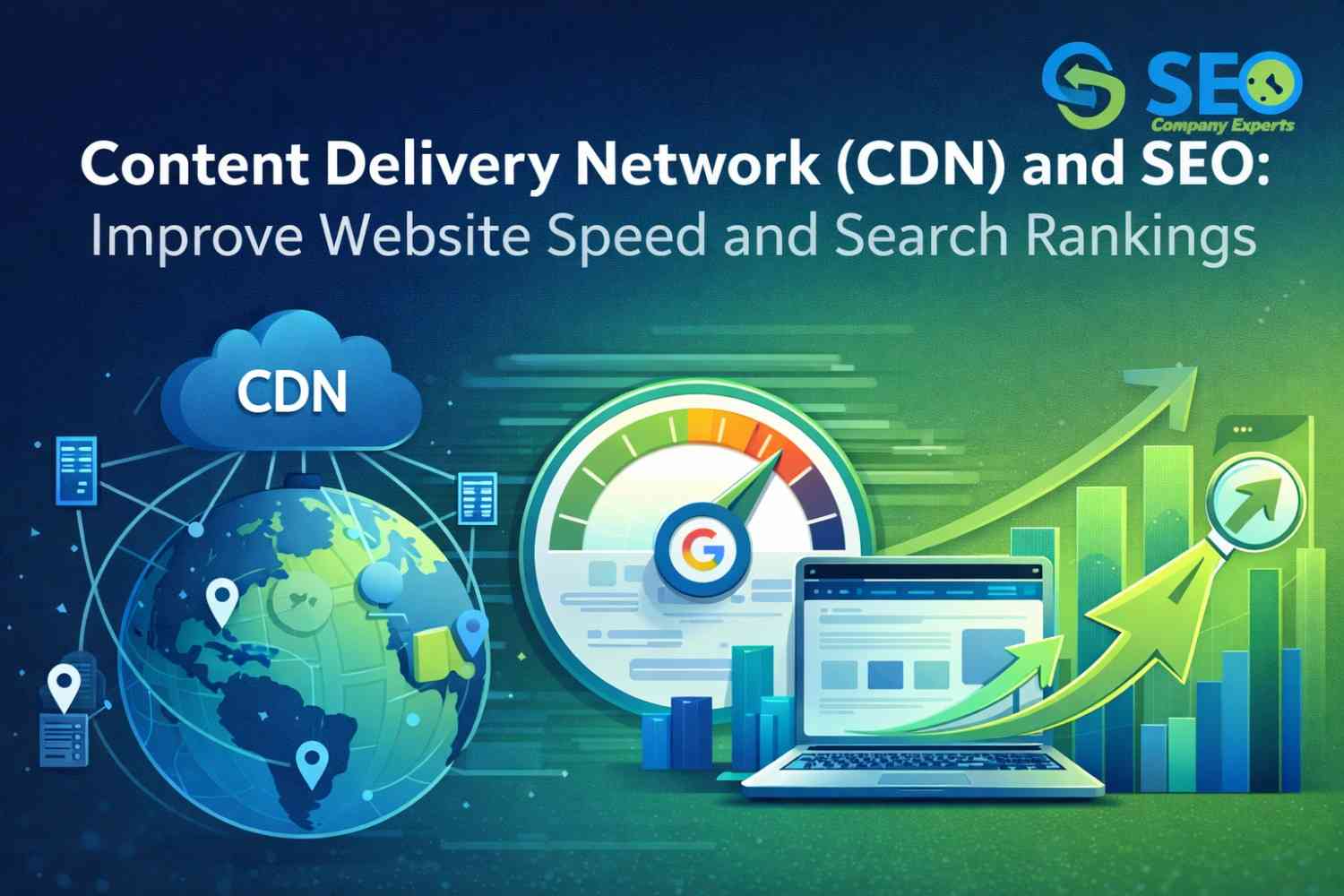
Website speed is no longer just a technical advantage; it is a core SEO ranking factor. As Google continues to prioritise page experience, Core Web Vitals, and mobile performance, businesses must adopt smarter infrastructure solutions to stay competitive. One of the most powerful yet often underutilised tools for performance optimisation is a Content Delivery Network (CDN).
A CDN enhances the speed at which your website loads, the security of its content delivery, and its reliability in serving users across various locations. When implemented correctly, a CDN directly supports technical SEO, user experience (UX), mobile SEO, and global search visibility.
A Content Delivery Network (CDN) is a distributed network of servers located across multiple geographic regions. These servers store cached versions of your website’s static and dynamic content and deliver it to users from the closest server location.
Instead of loading your website from a single origin server:
This system ensures faster page load times, improved reliability, and better scalability.
Google has made it clear that site speed directly affects rankings. Slow websites lead to poor user experience, higher bounce rates, and lower engagement, signals that negatively impact SEO.
A CDN supports all of these factors by delivering content faster and more consistently.
A Content Delivery Network (CDN) improves SEO performance by speeding up website loading times and delivering content from servers closest to users. Faster page speed enhances user experience, reduces bounce rates, and helps websites meet Google’s Core Web Vitals requirements. When combined with effective Content Marketing Services, a CDN ensures blogs, landing pages, and media-rich content load quickly and engage users longer. A CDN also improves crawl efficiency by reducing server load, allowing search engine bots to access and index content smoothly.
One of the biggest SEO benefits of a CDN is a significant improvement in loading speed.
A CDN helps:
User experience is now a ranking signal, not just a conversion factor.
CDN benefits for UX:
When users stay longer and interact more, search engines interpret this as high-quality content, boosting rankings.
For businesses targeting multiple countries or regions, a CDN is essential.
Without a CDN:
With a CDN:
This is especially important for e-commerce SEO, SaaS platforms, and global brands.
Search engine bots prefer fast, stable websites.
A CDN:
Google’s Core Web Vitals focus on real-world performance metrics. CDN technology directly enhances these metrics.
Improving these metrics strengthens your technical SEO foundation.
With mobile-first indexing, Google primarily evaluates the mobile version of your website.
A CDN improves mobile SEO by:
This leads to higher mobile rankings and better usability scores.
Security is an indirect but powerful SEO factor. Websites that experience downtime, malware attacks, or spam issues often lose rankings.
Images are often the largest contributors to slow websites.
A modern CDN supports:
This improves:
For eCommerce websites, speed equals revenue.
CDN advantages for eCommerce SEO:
Search engines reward fast-loading eCommerce sites with higher visibility and better rankings.
A CDN supports multiple Technical SEO Elements when configured correctly.
When aligned with professional Technical SEO Services, CDN implementation becomes a powerful ranking asset.
While CDNs are powerful, improper setup can hurt SEO.
Regular audits ensure your CDN enhances SEO instead of harming it.
Not all CDNs offer the same SEO benefits.
A well-chosen CDN complements your SEO strategy and supports long-term growth.
As AI-powered search evolves, performance and experience become even more important.
CDNs help prepare websites for:
This future-proofs your SEO strategy for 2026 and beyond.
A CDN is essential if:
In today’s competitive digital landscape, CDN is no longer optional; it’s strategic.
A Content Delivery Network (CDN) is one of the most effective tools for improving website speed, enhancing user experience, and boosting search rankings. By reducing load times, optimizing Core Web Vitals, improving mobile performance, and supporting technical SEO best practices, a CDN directly contributes to long-term SEO success.