Will AI Replace SEO? Not a Chance – Her...
Read More
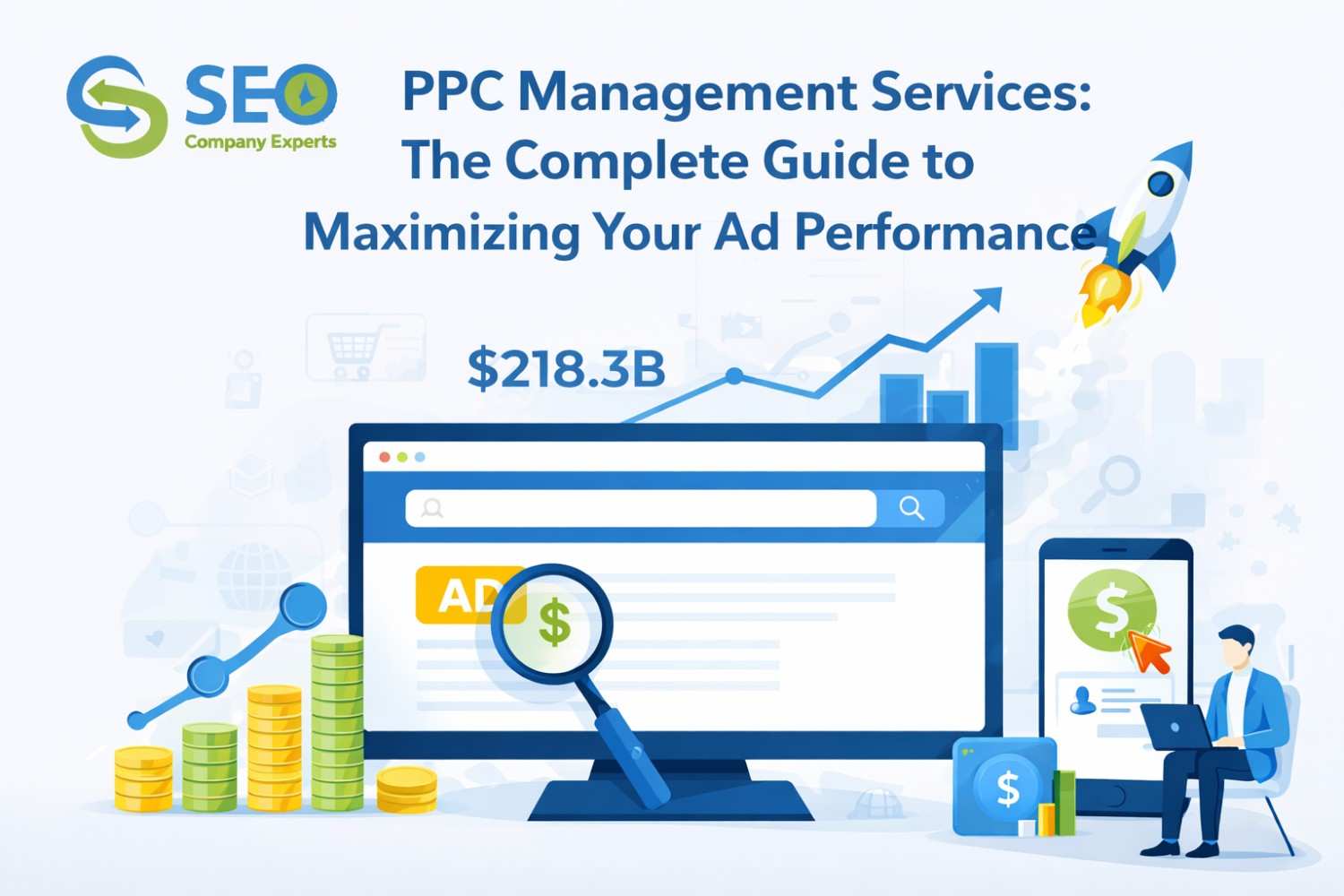
Global search ad spending is projected to reach $218.3 billion in 2026. Well, that says everything about how seriously businesses are taking PPC marketing right now. But here’s the thing nobody tells you, spending money on ads and actually making money from ads are two completely different things.
Before you choose a team for your PPC campaigns, pause for a second. Because today, everyone claims to be a professional in PPC management services. Every agency website says the same thing: “data-driven,” “results-focused,” “proven ROI.” So how do you actually tell who knows what they’re doing?
At SEO Company Experts, we’ve spent 15+ years running PPC campaigns for businesses across industries from local service providers to large e-commerce brands. Our clients keep coming back because we don’t just run ads. We take full ownership of what we promise and we stand behind every result we commit to.
Now, while we’d love to jump straight into a conversation about your specific PPC goals, we figured it’s worth giving you a solid foundation first. This guide is written for you whether you’re brand new to pay-per-click advertising or you’ve been burned by an agency before and want to understand things better this time around.
PPC stands for Pay-Per-Click. That part most people already know. But what they don’t fully grasp is how much actually goes into running a PPC campaign that works.
When you’re running pay-per-click advertising, you’re basically bidding for ad placements on platforms like Google or Bing. Every time someone searches something related to your business, an instant auction happens your ad competes against other advertisers, and if you win, your ad shows up. You only pay when someone clicks.
Sounds pretty straightforward, right? Here’s where it gets complicated.
The actual work figuring out which keywords to bid on, how much to bid, what your ads should say, where they should lead, how to track whether any of it is actually converting that’s where most businesses get completely lost. And that’s exactly what PPC management services handle.
A proper PPC management team takes everything off your plate. Keyword research, ad copy, bid strategy, audience targeting, tracking setup, ongoing optimization, reporting all of it. The goal is simple: make sure every dollar you spend on ads brings back more than a dollar in return.
Honestly? You can try. Google makes it pretty easy to set up a basic campaign. But “set up” and “optimized” are worlds apart.
Here’s what typically happens when businesses try to handle their own Google Ads campaign management without experience: the budget gets eaten up fast, the clicks come in but nothing converts, and after a couple of months the business owner decides PPC “just doesn’t work” for them. It’s not that PPC doesn’t work. It’s that campaigns left unmanaged almost always underperform.
Some real numbers to put things in perspective:
Beyond the numbers, think about the time involved. Reviewing search term reports, adjusting bids, testing new ad variations, analyzing what’s working by device, by time of day, by location done properly, this is a part-time job on its own. Most business owners have neither the time nor the platform expertise to do it well. That’s not a criticism, it’s just reality.
Before you hand your budget to anyone, it helps to understand the basics of how the auction system works. This way, you can have an informed conversation with your PPC team instead of just nodding along.
Every time someone types a search query into Google, an automated auction takes place in milliseconds. Advertisers who’ve bid on that keyword compete for the available ad spots. But here’s the part most people don’t realize the winner isn’t just whoever bids the most.
Google uses something called Ad Rank. It’s calculated as your bid amount multiplied by your Quality Score multiplied by the expected impact of your ad extensions. Your Quality Score is Google’s way of rating how relevant your ad and your landing page are to the search. A well-optimized campaign can actually outrank a competitor who’s spending more purely because their ads are more relevant.
This is why PPC management services obsess over Quality Score. A higher Quality Score means you pay less per click AND show up higher on the page. It’s the closest thing to a shortcut that exists in PPC, and it only comes from careful, ongoing optimization.
In competitive US markets legal, finance, home services, healthcare average CPC can run anywhere from $2 to $15 or more. Without the right management, those clicks add up to nothing. With the right management, each click becomes a step in a conversion funnel that’s been thought through carefully.
This is the part a lot of agencies gloss over in their sales pitch. Let’s get specific about what should actually be included when you hire someone for PPC management services.
Good keyword research isn’t about finding the most popular search terms in your industry. It’s about finding the right balance between search volume, competition, and buyer intent. A search like “best PPC management services for e-commerce” has lower volume than “PPC services” but a much higher chance of converting because the person searching it knows exactly what they want.
Your team should also be building a solid list of negative keywords from day one. These are search terms you don’t want your ads showing up for. Without them, you’ll be paying for clicks from people who were never going to become customers anyway.
Writing ads that perform well is not as simple as filling in the headline and description fields. The best PPC teams test multiple versions of ad copy simultaneously different hooks, different calls to action, different value propositions. They use responsive search ads, dynamic keyword insertion, and ad extensions like sitelinks and callouts to squeeze every bit of performance out of each placement. Good ad copy alone can push CTR up by 15% or more.
Bid management is where a lot of money gets wasted when campaigns aren’t properly managed. Modern platforms offer Smart Bidding strategies like Target CPA and Target ROAS that use machine learning to optimize bids automatically. But these tools need to be set up correctly and monitored they can make terrible decisions early on if the campaign doesn’t have enough conversion data yet. Your PPC team needs to know when to use automation and when to take manual control.
Here’s something a lot of PPC agencies won’t tell you: the problem isn’t always the ad. Sometimes campaigns underperform because the landing page is the weak link. If your ad promises a 20% discount and your landing page makes people hunt for it, you’re going to lose conversions. A good PPC management service will review your landing pages and tell you exactly what needs to change even if that’s outside their immediate scope of work.
Most people don’t buy the first time they visit your site. Remarketing campaigns let you stay in front of people who’ve already shown interest in your business. These are often the highest-ROI campaigns in any account because you’re targeting warm audiences. If your current PPC setup doesn’t include remarketing, that’s money being left on the table every single day.
This one matters more than people think. You should be getting regular reports that show you in plain language what’s happening with your campaigns. CTR, CPC, conversion rate, cost per conversion, ROAS. Not just raw data dumps, but actual insights about what the numbers mean and what’s being done about it.
PPC isn’t just Google search ads. There are several campaign types, and the right mix depends entirely on your business goals. Here’s a simple breakdown:
| Campaign Type | What It Does | Best For |
|---|---|---|
| Search Ads | Text ads on Google/Bing search results, triggered by specific keywords. | Direct lead generation and bottom-funnel conversions |
| Display Ads | Image ads that appear across millions of websites in Google’s network. | Brand awareness and audience retargeting |
| Shopping Ads | Product listings with images and prices, shown directly in search results. | E-commerce businesses selling physical products |
| Local Service Ads | Location-based ads targeting people searching for services nearby. | Local service businesses like plumbers, lawyers, dentists |
| YouTube / Video Ads | Skippable or non-skippable ads shown before and during YouTube videos. | Brand storytelling and reaching wider audiences |
| Performance Max | AI-driven campaigns running across all Google channels at once. | Businesses ready to scale across multiple platforms |
A word of advice here don’t try to run all of these at once right out of the gate. Start with the campaign type most aligned to your immediate goal, get that working well, then expand. Spreading a limited budget too thin across multiple campaign types is one of the most common mistakes we see.
A lot of business owners don’t really know what their PPC agency is doing between monthly reports. Here’s an honest look at what active Google Ads campaign management should involve:
Every single day, someone should be checking budget pacing making sure you’re not burning through your weekly budget by Tuesday morning. Disapproved ads need to be caught and fixed fast. Impression share for your most important keywords should be monitored regularly.
Every week, the team should be digging into search term reports. These reports show you the actual phrases people typed before clicking your ad. You’d be surprised how many irrelevant searches trigger ads when negative keywords aren’t managed properly. Adding 20 to 50 new negatives per month is totally normal in an active, well-managed account. Weekly work also includes checking which devices are converting best, adjusting bids accordingly, and reviewing any A/B test results from ad variations.
Every month, it’s time for a bigger picture review. Quality Scores across the account, conversion rate trends, ROAS against targets, keyword expansion opportunities, competitor auction data. This is also when ad creative should be refreshed running the same ads for months on end leads to ad fatigue, and performance drops quietly before most people notice.
In 2026, staying on top of Google’s AI-powered features especially Performance Max and demand generation campaigns is also part of the job. These tools can deliver great results when managed correctly. Left alone without human oversight, they can also waste significant budgets chasing the wrong signals.
Let’s talk about money, because this is usually the question that comes up first in any conversation.
PPC management services in the US generally follow a few different pricing models. Flat fee arrangements usually run between $1,000 and $5,000 per month and work well for businesses with smaller monthly ad budgets typically under $20,000. Percentage of ad spend is more common at the mid-market level, usually running between 12% and 20% of whatever you’re spending on ads monthly. Hybrid models combine a base fee with a smaller percentage, which is common for growing businesses that want cost predictability. Hourly consulting, usually $100 to $250 per hour, works for one-off projects like audits or strategy sessions.
Now here’s the more important number: what return should you expect? A well-managed PPC campaign should be delivering a ROAS of at least 300% meaning for every dollar you put into ads, you’re getting three dollars back. Many campaigns exceed this significantly. If your current campaigns aren’t somewhere near that benchmark, something needs to change.
Don’t just shop for the cheapest PPC management services you can find. An agency charging $500/month that produces mediocre results will cost you far more in wasted ad spend than an agency charging $2,000/month that genuinely knows how to optimize. Think about what you’re investing in, not just what you’re paying.
Well, in case you are looking for a closer estimation we can assist you. Just click here and get your free custom quote for pay-per-click management services.
We’re going to be straightforward with you here, because there are a lot of agencies out there that are very good at selling their services and not nearly as good at delivering results.
Here’s what to actually look for:
Whether you’re evaluating your current agency or just trying to stay on top of things, here’s a simple checklist:
Daily:
Weekly:
Monthly:
You can start getting traffic almost immediately after campaigns go live. But genuinely optimized performance where your costs are down and conversions are up consistently usually takes 2 to 3 months of active management. Campaigns need enough data to optimize properly, and that takes a little time.
They do different jobs. PPC gets you in front of buyers right now. SEO builds your visibility over time without ongoing ad spend. Most businesses that are serious about digital growth invest in both. If you have to choose one to start, PPC typically delivers faster measurable results, which makes it easier to justify the investment early on.
The general rule of thumb is 300% three dollars back for every dollar spent. But this varies quite a bit by industry. E-commerce brands with thin margins often need 500% or higher to actually be profitable. Service businesses with high-ticket offerings might be perfectly happy at 200%. Your PPC team should help you figure out the breakeven ROAS specific to your margins before they even start setting campaign targets.
Fair question. The honest answer is: ask for proof before you commit. We’ll show you real campaigns, real numbers, and real client results from businesses similar to yours. We’ll also do a free audit of whatever you’ve got running right now and tell you exactly what we see no sales spin. You’ll be able to judge for yourself whether we know what we’re talking about.
Not necessarily. Local businesses can run effective pay-per-click advertising campaigns starting at $1,000 to $2,000 in monthly ad spend. What matters more than the total budget is that it’s being managed properly. A smaller budget that’s well-optimized will outperform a bigger budget that’s being mismanaged every single time.
For most businesses, Google Ads is the starting point it has the largest search volume by far. Microsoft Advertising (Bing) is worth adding once Google campaigns are stable, and it often has lower CPCs in many industries. Social media PPC on Meta or LinkedIn makes sense depending on your audience. A good PPC management team will recommend the right mix based on where your specific customers actually spend time online.
Here’s something a lot of businesses don’t think about until they’re already deep into their PPC campaigns: Google isn’t the only place your customers are spending time online. They’re on Facebook. They’re scrolling Instagram. They’re on LinkedIn if you’re in the B2B space. And if your ads aren’t showing up in those places too, you’re leaving a pretty significant gap in your marketing.
Now, social media ads work differently from search ads. On Google, you’re catching people at the exact moment they’re searching for something high intent, ready to act. On social media, you’re reaching people while they’re browsing, not necessarily looking for anything specific. That sounds like a disadvantage, but it’s actually a massive opportunity when you use it the right way.
Like, if someone searches for “best accountant for small business” on Google, clicks your ad, visits your website, but doesn’t fill out your contact form. On Google, that person is gone.
But if you’re running social media ads alongside your PPC campaigns, you can now show that exact person a targeted ad on Facebook or Instagram a reminder that you exist, maybe with a testimonial or a special offer this time. That’s remarketing across channels, and it works incredibly well.
Facebook and Instagram give you targeting capabilities that Google search simply can’t match. You can target people based on their interests, their demographics, their behaviors, the pages they follow, even their life events. Getting married soon? Expecting a baby? Just moved? Facebook knows, and advertisers can use that information to put the right message in front of the right person at the right time.
For businesses running PPC campaigns, Facebook and Instagram ads are incredibly useful for a few specific things. First, building brand awareness among audiences who’ve never heard of you so that when they do eventually search on Google, they already recognize your name. Second, retargeting people who visited your website through Google but didn’t convert. Third, running offers and promotions to warm audiences who already know your brand but haven’t bought yet.
The cost structure is different too. While Google Ads charges per click on search, Facebook and Instagram typically cost less per click but the intent is lower. That’s why the smartest approach is using both together: Google to capture high-intent searchers, social to build familiarity and retarget everyone who didn’t convert the first time.
If your business sells to other businesses, LinkedIn is in a category of its own. Nowhere else can you target ads specifically to CEOs, marketing managers, HR directors, or procurement teams at companies of a specific size in a specific industry. That level of professional targeting doesn’t exist on any other platform.
LinkedIn ads tend to cost more per click than Google or Facebook CPCs of $5 to $15 are common. But when you’re selling a $50,000 software solution or a high-ticket consulting service, paying $10 to get in front of exactly the right decision-maker is an extremely reasonable trade. For B2B businesses, LinkedIn ads complement PPC campaigns by keeping your brand visible to prospects throughout what are often long, multi-touchpoint sales cycles.
The businesses that get the best results from paid advertising aren’t treating Google Ads and social media ads as separate things. They’re running them as one connected strategy. Here’s what that looks like in practice:
This is what a full-funnel paid advertising strategy actually looks like. PPC management services that only handle Google Ads are giving you half the picture. The real opportunity is in connecting all of these channels so they’re working together toward the same goal.
At SEO Company Experts, we manage both PPC campaigns and social media advertising which means we can build and oversee this kind of connected strategy for your business without you having to coordinate between multiple agencies. One team, one strategy, one clear line of accountability.
We hope this guide gave you a genuinely clearer picture of what PPC management services actually involve, what to expect from a good team, and what warning signs to watch out for when choosing one. Now when you sit down with a potential PPC partner, you’ll know the right questions to ask and you won’t be easily talked around with vague promises.
In case you still don’t have a team handling your PPC management services Team SEO Company Experts is always just a call away. We’ve been doing this for 15+ years, we work with real businesses with real budgets, and we don’t make guarantees we can’t keep. We bet that after choosing us, you won’t ever regret your decision.
To schedule a 1:1 discussion with our PPC marketing team, just click here.