

Mobile Optimisation for SEO: Essential Proces...
Read More
You have written the content. You have ticked the technical boxes. And still the page sits on page three, not page one. Something is missing, and it is not another keyword.
Here is what it likely is: Google does not just rank pages for what they say. It ranks them for who said it, whether that person actually knows the subject, and whether the site behind the content has earned the right to be trusted. That is the whole idea behind E-E-A-T.
If you have been treating E-E-A-T as a vague concept that does not quite translate into real work, this guide is for you. We will break down what it actually means, why Google built trust into the center of it, and what you can do this week, this month, over the next six months to build a site that Google genuinely wants to rank.
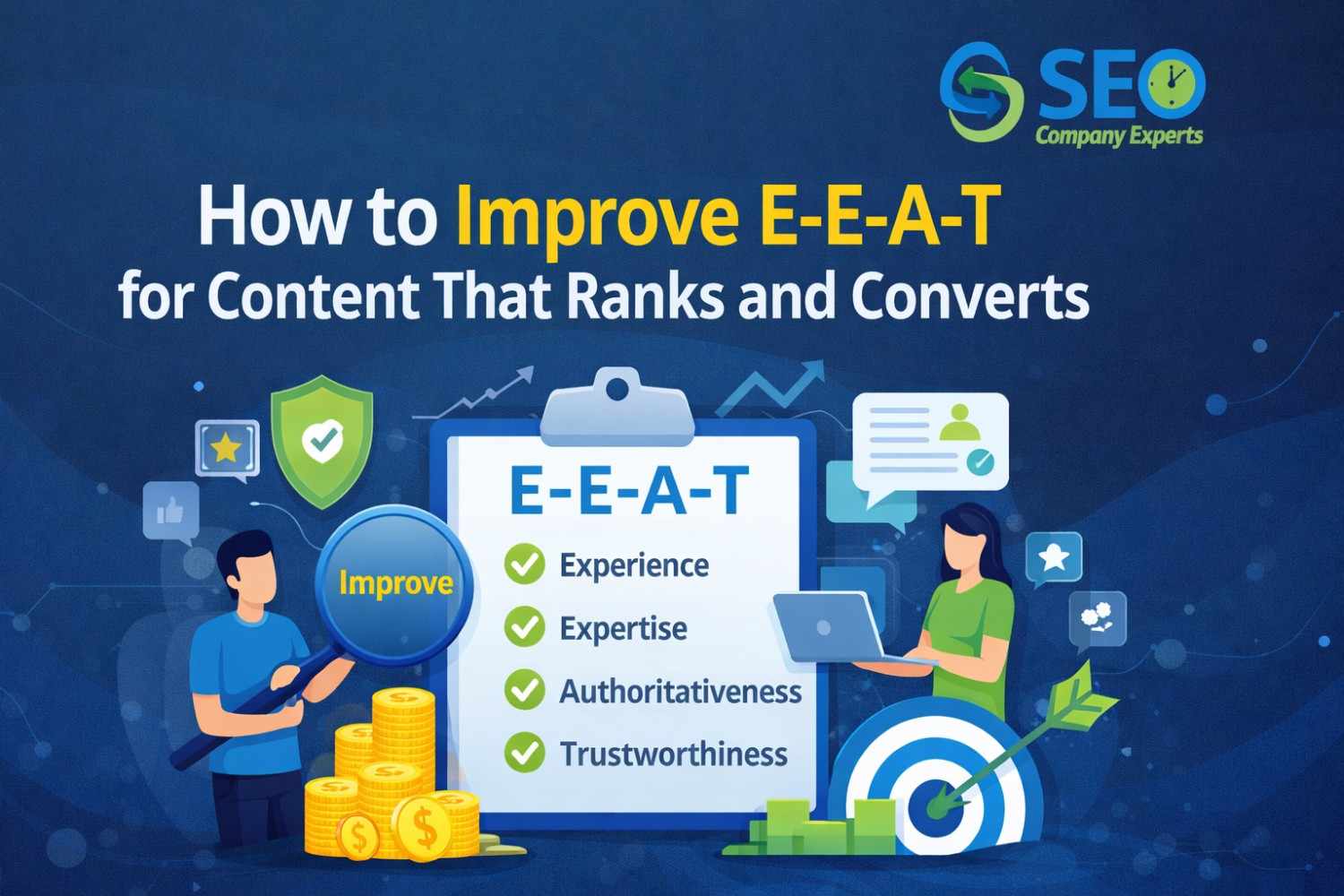
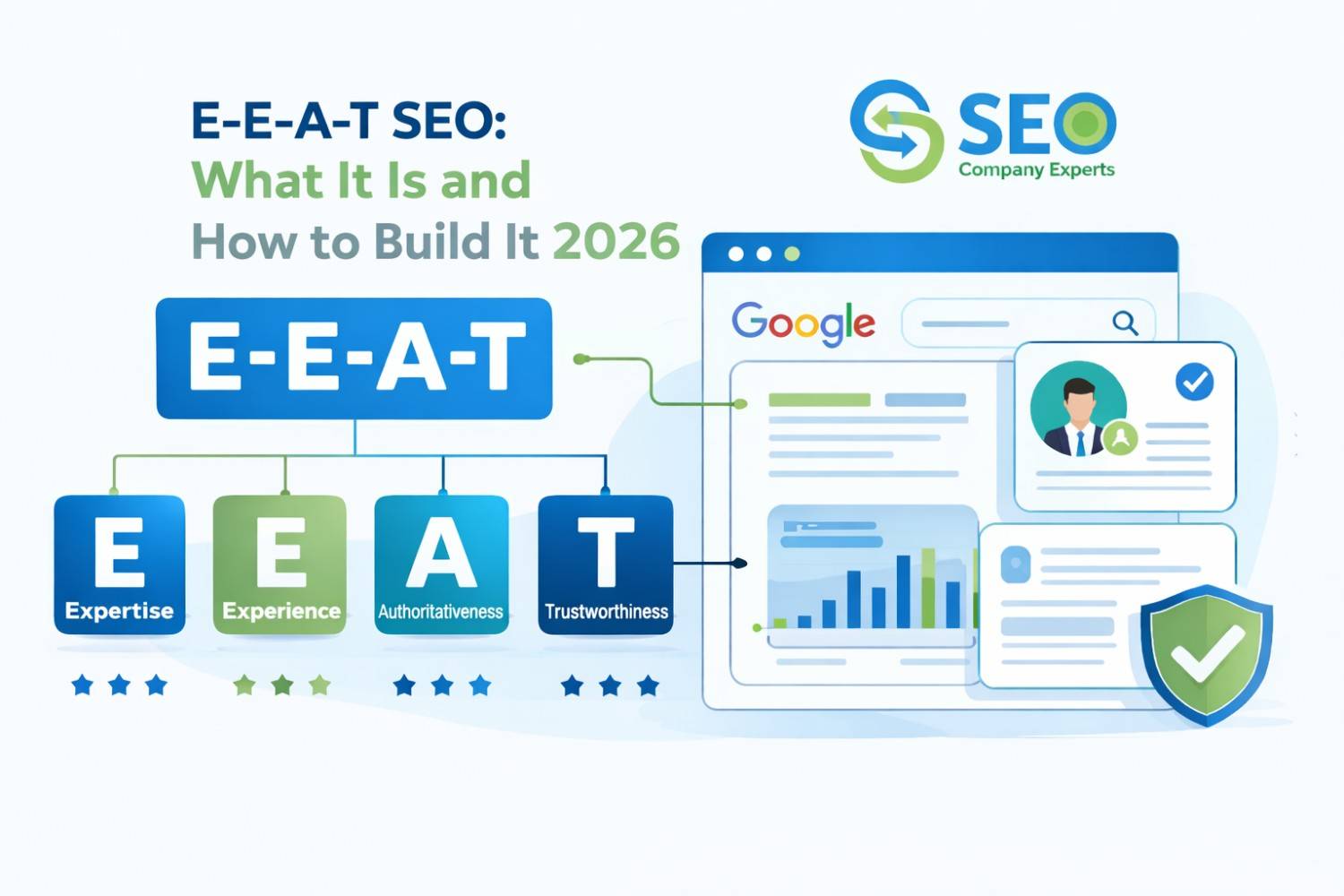
E-E-A-T stands for Experience, Expertise, Authoritativeness, and Trustworthiness. Google introduced the concept through its Search Quality Rater Guidelines an internal document that trains human reviewers to assess whether a page deserves to rank. The extra E for Experience was added in late 2022, making it a four-part framework.
Here is what each part means in plain language:
| Element | What Google Is Really Asking |
| Experience | Has the person who wrote this actually lived it? Did they use the product, visit the place, go through the process — or did they just write about it from the outside? |
| Expertise | Does the author have real knowledge of this subject? Do their credentials, background, and track record support the claims they are making? |
| Authoritativeness | Is this site or person recognized as a reliable source by others? Do credible sites link to it? Does the industry treat it as a go-to reference? |
| Trustworthiness | Is the site honest, transparent, and safe to use? This includes everything from HTTPS to clear author names to accurate information. |
Of the four, Google is clear that trust matters most. Its own guidelines state that an untrustworthy page has low E-E-A-T, no matter how experienced or expert the author appears. That is an important sentence. It means all the expertise in the world does not compensate for a site that looks sketchy, hides who wrote the content, or publishes inaccurate information without correction.
This one comes up a lot. The short answer is: not technically, but practically yes.
Google does not assign an E-E-A-T score and feed it directly into the algorithm. What it does is build algorithms that reward the signals that indicate strong E-E-A-T. So when you improve your author pages, earn quality backlinks, keep your content accurate, and build a secure, transparent site, the algorithm picks that up through dozens of smaller signals.
Think of it this way. Google uses human quality raters to evaluate whether its algorithm is surfacing the right content. Those raters use E-E-A-T as their framework. The algorithm is trained to match what those raters would approve. So if your content would get a low E-E-A-T rating from a human reviewer, it is probably not doing well in search either even if you cannot point to one specific factor as the cause.
The practical takeaway is this: building E-E-A-T is not about gaming a metric. It is about making your site genuinely better in the ways that Google has repeatedly said it values.
Before 2022, the framework was just E-A-T. The addition of Experience was a deliberate signal that Google wanted to reward more than just textbook knowledge.
Here is the difference between expertise and experience in practice. A nutritionist has expertise in diet and health. But if they have never actually followed a specific meal plan they are writing about, their content is missing something that a reader who has lived through it would have. That lived perspective the friction, the real results, the honest observations is what Google started weighting more heavily.
This shift happened partly because of content farms. High-volume content producers could hire freelancers to write technically accurate articles about almost any subject without any of those writers having real-world involvement in the topic. The Experience element makes it much harder to fake depth. You cannot manufacture the detail that comes from actually doing something.
In practice, this means content that includes real outcomes, honest observations, specific details, and personal context ranks better than polished-but-hollow pieces that cover the same topic from a distance.
E-E-A-T applies to every website. But the stakes are significantly higher on what Google calls YMYL pages Your Money or Your Life. These are topics where inaccurate or misleading information can cause real harm to a reader’s finances, health, safety, or well-being.
| YMYL Topic Area | Why E-E-A-T Matters Here |
| Health and medical advice | A wrong recommendation can cause physical harm. Google expects qualified authors and medically reviewed content. |
| Financial and legal guidance | Bad advice on investments, taxes, or legal situations can cost people real money or legal trouble. |
| News and current events | Misinformation spreads fast. Google wants sources with a demonstrated track record of accuracy. |
| Safety-related content | Anything involving emergency procedures, product safety, or risk assessment needs credible sourcing. |
| Significant life decisions | Parenting, education and mental health are areas where people are vulnerable and the information matters deeply. |
If your site touches any of these areas and your content is not backed by real credentials, clear authorship, and verifiable accuracy, that is likely the biggest gap between where you rank now and where you want to be.
For sites outside YMYL lifestyle blogs, entertainment, hobby content E-E-A-T still matters, but the bar for what constitutes sufficient experience and expertise is lower. A rock-climbing enthusiast writing about routes they have climbed is demonstrating experience even without a formal certification.
This is the part most content teams skip because it takes more work than adding keywords. But it is also the part that produces the biggest gap between your content and what a competitor who just rewrites existing articles can produce.
Building experience into content means showing that the person who wrote it has actually been there. Here is what that looks like in practice:
Generic content says: ‘To improve your email open rates, test your subject lines.’ Experience-driven content says: ‘When we ran A/B tests on 14 subject line pairs across a 30-day period, personalization tokens increased open rates by 9% but only in B2C lists. B2B lists showed almost no difference.’ The second version can only be written by someone who actually ran those tests. That specificity is what Google is looking for.
Authentic experience includes failure. If you tried something and it did not deliver what you expected, say so. Readers trust content that admits limitations. Google’s quality raters are trained to look for this kind of honesty as a marker of genuine experience.
If you run an agency, your consultants have the experience. If you build software, your engineers and product managers have it. Content written by the people who actually do the work will always carry more E-E-A-T weight than content produced by a writer who interviewed them briefly or summarized their notes.
Customer interviews, user testimonials, and case studies that describe real situations are all forms of documented experience. They add a layer of social proof that a reader cannot get from a search engine and they signal to Google that multiple real people have engaged with your subject.
Expertise is about being qualified to make the claims your content makes. For YMYL topics, that means formal credentials. For other topics, it means demonstrated knowledge and a track record that readers can verify.
This is the single most underused E-E-A-T tactic on most websites. An author page that lists someone’s name, job title, years of experience, relevant qualifications, published work, and links to their professional profiles (LinkedIn, Google Scholar, industry associations) gives Google a clear signal about who is behind the content.
A generic author bio that says ‘Jane is a content writer with a passion for health topics’ does almost nothing for your E-E-A-T. A bio that says ‘Jane is a registered dietitian with 12 years of clinical practice and a master’s degree in nutritional science, and has been published in three peer-reviewed journals’ that is doing real work.
Do not publish a legal article under the name of your marketing manager. The author listed on any given piece should be genuinely qualified for that specific topic. If you do not have in-house expertise for a subject, consider bringing in a guest expert or having your content reviewed and signed off by someone who does.
Many health and finance publishers now add a ‘medically reviewed by’ or ‘reviewed by a licensed financial advisor’ note at the top of their articles. This is not just a legal safeguard it is a direct E-E-A-T signal that someone with formal expertise has signed off on the accuracy of the content.
Link to previous work. Reference published research your team has contributed to. Show case studies. The more evidence you can provide that your team has a history of getting this subject right, the more Google can treat your site as genuinely expert.
You cannot build authority by declaring it on your own website. It is earned through what the rest of the internet says about you. That means backlinks from credible sources, mentions in industry publications, citations in other well-regarded content, and a brand presence that extends beyond your own pages.
Here is how to think about it in practice:
One link from a respected industry publication carries more E-E-A-T weight than fifty links from low-quality directories. The quality of who is linking to you signals to Google whether your site is genuinely respected or just trying to game the system. Focus your link-building on relevance and reputation, not volume.
Content that contains original data surveys, proprietary studies, experiment results attracts links naturally because other writers cite it. A single well-constructed research piece can earn dozens of high-quality backlinks over time and position your site as a primary source rather than a secondary aggregator of existing information.
Google builds a picture of what your brand is through something called entity recognition. This means associating your organization with consistent information across multiple credible sources your Wikipedia page if you have one, your CrunchBase profile, your LinkedIn company page, your Google Business Profile. The more consistent and widely referenced your brand identity is, the more clearly Google can identify you as an authoritative entity in your space.
A site with 30 deeply detailed articles on a narrow subject will typically outperform a site with 300 shallow articles covering everything loosely. Google rewards genuine topical authority, which comes from covering a subject thoroughly rather than just touching on many subjects briefly. Build content clusters: a comprehensive pillar page, supported by detailed articles on related subtopics, linked together properly.
Trust is the foundation that all three other elements rest on. You can have the most experienced author in the field writing the most authoritative content but if your site looks untrustworthy, none of it counts.
Trustworthiness in Google’s framework comes down to a few core things:
Your site should make it immediately clear who is behind it. That means an About page that describes the organization or individual clearly, contact information that works, named authors on all content, and no anonymous or pseudonymous publishing on sensitive topics. If a user cannot figure out who runs your site within 30 seconds, that is a trust problem.
This sounds obvious, but it is often violated subtly. Rounding up statistics to make a point look stronger. Citing sources that do not actually support the claim. Publishing information that was true two years ago but is no longer accurate and has not been updated. All of these erode trust with readers and with Google’s quality raters.
HTTPS is now a baseline expectation. Beyond that, a site that loads properly, does not contain broken links, does not bombard users with intrusive ads, and works on mobile sends implicit trust signals through its Core Web Vitals scores and user behavior data. A site that fails on these basics will struggle to rank well regardless of how good the content is.
Google’s quality raters are instructed to look beyond the site itself to check what others say about you. This includes reviews on third-party platforms, mentions in news coverage, and whether your brand appears in trusted contexts. A history of customer complaints, negative press, or associations with untrustworthy practices will drag down your E-E-A-T regardless of what your own website says about itself.
Structured data is one of the more technical sides of E-E-A-T, and it is one that a lot of content teams leave on the table. Schema markup is code you add to your pages that helps Google understand what the content is, who created it, and how it relates to other authoritative sources.
After Google’s March 2026 core update, the role of structured data shifted noticeably. It is no longer primarily about generating rich results in search it is increasingly functioning as a trust and entity signal that feeds into how Google’s AI systems understand and evaluate your site.
This tells Google who you are as an entity. It includes your organization’s name, logo, website, and most importantly for E-E-A-T same As links that connect your brand to its presence on authoritative external platforms. If Google can find your organization listed consistently across LinkedIn, Wikipedia, and CrunchBase, it can confirm your brand identity with greater confidence.
This is attached to your author pages and tells Google the name, job title, professional affiliation, and external profile links for each content creator. It directly supports the Expertise and Trustworthiness elements by giving Google verifiable information about who is behind your content.
This marks up individual pieces of content with the author name, publication date, last-modified date, and publisher information. It is particularly important for news, health, finance, and other YMYL content where currency and authorship are critical trust signals.
Implementing schema correctly takes some technical setup, but it is a one-time investment that pays dividends across your entire site. Use JSON-LD format, validate with Google’s Rich Results Test, and make sure your same As links point to legitimate, active external profiles.
If you have an existing site with a library of content, you do not need to rebuild from scratch. You need to audit what you have, identify the gaps, and prioritize fixes based on which pages matter most for your traffic and goals.
Here is a practical audit framework:
| Audit Check | What to Look For | Priority |
| Author attribution | Does every page have a named author? Is that author qualified for the topic? | High |
| Author bio quality | Does the author page include credentials, experience, and external profile links? | High |
| Content accuracy | Are the facts, statistics, and dates current? Have claims been sourced correctly? | High |
| First-hand depth | Does the content include specific details, real outcomes, or genuine experience? | Medium |
| Schema implementation | Is the Article, Person, and Organization schema present and valid? | Medium |
| Trust signals | Is the site on HTTPS? Are contact details and policies visible and current? | High |
| External reputation | Are there third-party reviews, media mentions, or industry citations pointing to your site? | Medium |
| Internal linking | Do related articles link to each other and to cornerstone content in a logical structure? | Medium |
Start with the pages that drive the most traffic or target your most important keywords. Fixing E-E-A-T signals on your top 20 pages will have a disproportionate impact compared to fixing your lowest-performing content first.
After making changes, give it time. Core algorithm updates happen several times a year. If you make meaningful improvements to your E-E-A-T Content, you are most likely to see ranking changes in the weeks following a core update rather than immediately after making the changes.
| Tactic | E-E-A-T Element | Time to Implement | Expected Impact |
| Add named authors with full bios and credential links | Expertise, Trust | Days to weeks | High |
| Add first-hand details, real outcomes, and case studies to content | Experience | Weeks | High |
| Implement the Organization, Person, and Article schema | Trust, Expertise | Days to weeks | Medium-High |
| Update outdated statistics and fix factual errors | Trust | Ongoing | High |
| Build links from relevant, authoritative publications | Authoritativeness | Months, ongoing | High |
| Publish original research or proprietary data | Authoritativeness, Experience | Months | High |
| Set up HTTPS and fix broken links and page errors | Trust | Days | Medium |
| Add an editorial review process for YMYL content | Expertise, Trust | Weeks | High |
| Build a consistent brand entity across external platforms | Authoritativeness, Trust | Weeks | Medium |
| Collect and display third-party reviews and certifications | Trust | Weeks to months | Medium |
The highest-return starting points for most sites are author bios, content accuracy, and schema markup. These take relatively little time to implement and address the Trust and Expertise elements directly. Link building takes longer but is the primary lever for Authoritativeness so it should be running in parallel, not waiting until everything else is done.
E-E-A-T is not a score you can pull from Google Search Console. But the impact of improving your E-E-A-T shows up in measurable places if you know what to watch.
After a core update, pages with improved E-E-A-T signals should recover or gain positions. Track rankings for your priority pages before and after each update window.
When people search specifically for your brand name, that is a signal that your site has built recognizable authority. Growing branded search over time is one of the clearest indicators that your authority is improving.
Track not just the number of sites linking to you, but the authority and relevance of those sites. Growth in high-quality referring domains is the primary measurable signal of improving Authoritativeness.
Time on page, scroll depth, and low bounce rates are signals that users find your content genuinely useful and credible. They are not direct E-E-A-T signals, but they correlate with what Google wants to reward.
If you have built out your author pages properly, they should attract some organic traffic from people searching for your contributors. More practically, they signal to Google that real people with real credentials are behind your content.
Use Google’s Rich Results Test and Search Console’s Enhancements report to track what percentage of your key pages have valid structured data. Aim for full coverage of Article, Person, and Organization schema across your core content.
The framework is not theoretical. There are documented cases where E-E-A-T work produced significant, measurable results.
One medical website that restructured its content around qualified authors, added detailed expert bios, and introduced an editorial review process saw a 291% year-on-year increase in organic sessions and a 300% increase in organic revenue in the same period. The changes were not to keyword density or technical SEO. They were referring to the credibility signals on the site.
In a content migration test, moving a library of glossary content from a domain with weak brand signals to a site with stronger entity recognition and E-E-A-T markers produced a 1,400% increase in search visibility. Same content. Different home. The difference was entirely in the E-E-A-T context surrounding it.
These are not outliers. They reflect a consistent pattern across case studies from 2023 to 2026: when sites invest in genuinely improving their trust, expertise, and authoritativeness signals, the algorithm rewards them especially in the cycles following major core updates.
‘Staff Writer’ or ‘Editorial Team’ as an author attribution is one of the clearest E-E-A-T red flags, especially on health, finance, or legal content. Every piece of content should have a real, named, qualified author. If you use freelancers, their credentials matter too build them out properly.
This is more common than most editors realize. A linked source that is paywalled, outdated, or tangentially related to the claim it is supposed to support does more harm than no citation. Cite accurately, check that the source says what you say it says, and update citations when the underlying research changes.
A page published in 2021 with statistics from 2019 that has not been touched since is a trust liability. Set a content calendar for regular updates especially for pages that rank well and could lose ground if the information becomes outdated.
Structured data has moved from ‘nice to have’ to ‘table stakes’ for sites that want to be treated as authoritative entities by Google’s systems. If you do not have the Organization and Author schema in place, you are missing one of the clearest technical signals of trustworthiness available to you.
Publishing 10 articles a week on surface-level topics to hit a content quota is the opposite of what E-E-A-T rewards. One well-researched, genuinely useful, expert-authored piece will outperform ten shallow articles every time and will attract the backlinks and engagement signals that compound over months and years.
Here is the honest version: E-E-A-T is not a checklist you complete once and move on from. It is a standard that Google applies continuously, and the bar rises as more sites get better at meeting it.
The sites that are winning in search right now are the ones that have made genuine credibility a core part of how they operate not a box they ticked for SEO. They have real authors with real credentials. Their content includes real experience. They have earned external recognition. And they present their information honestly, accurately, and transparently.
None of that is impossible to build. It just requires treating content as a long-term investment rather than a short-term ranking tactic. Start with the signals you can improve this week author pages, schema and content accuracy. Build toward the ones that take longer earned links, media mentions, original research. And keep measuring what changes after each update cycle.