


What Is Conversion Rate Optimization? A Compl...
Read More
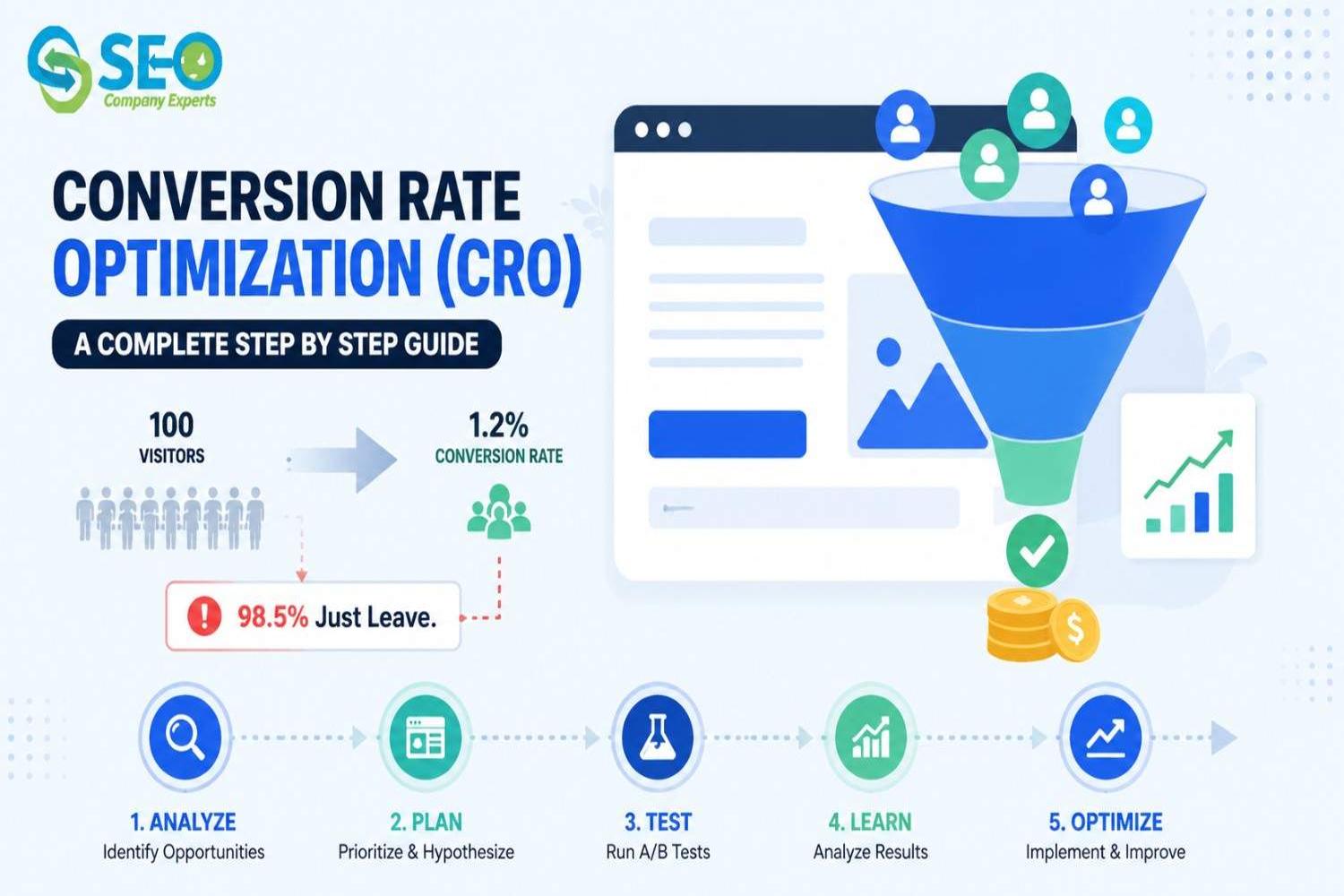
I’ll start with something that still surprises me even after years of doing this work. I’ve seen businesses, real serious businesses spending 3, 4, sometimes 5 lakhs a month on ads, and their website is sitting there converting at 1.2%. One point two percent. That means out of every 100 people who show up, 98 and a half of them just… leave.
And when I bring this up, the first instinct is always “let’s run more ads.” More traffic. More budget. That’ll fix it.
It won’t. And I think deep down, most marketers know that, they just don’t know what else to do.
That’s kind of why I wanted to write this. Because conversion rate optimization done properly is honestly one of the most underused growth levers I’ve come across. And I want to break it down in a way that actually makes sense, not the usual textbook version.
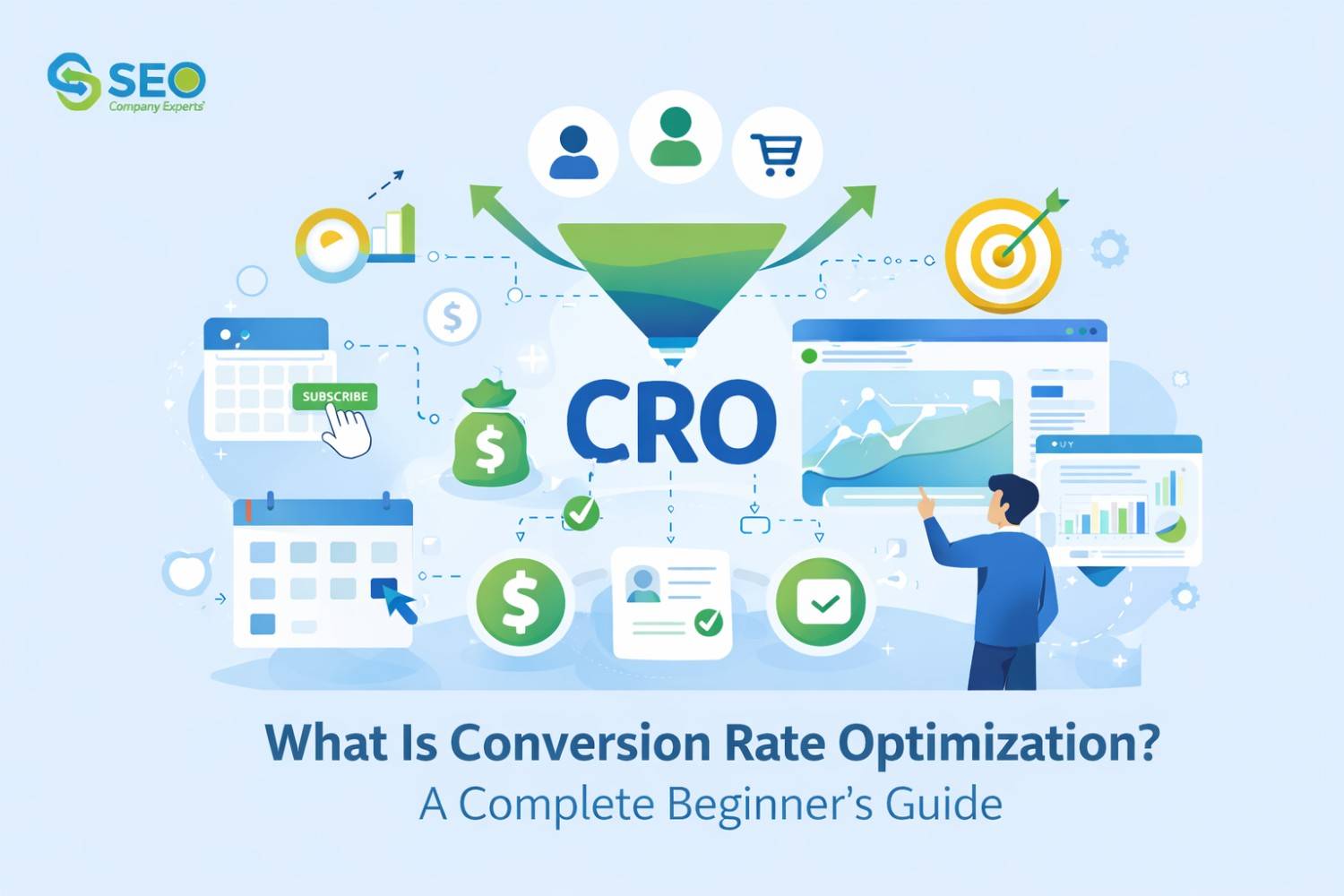
Alright, in very simple terms, conversion rate optimization is the work you do to get more of your existing website visitors to take action. Buy something. Fill a form. Book a call. Whatever your goal is.
The formula people throw around is simple enough:
Conversion Rate = (Conversions ÷ Total Visitors) × 100
So say 8,000 people visit your landing page this month and 160 of them fill out your lead form. That’s a 2% conversion rate. CRO is everything you do to push that number higher without needing to buy more traffic to do it.
Now here’s the thing I want you to really sit with. If you’re at 2% and you get it to 4%… you’ve literally doubled your leads. Same traffic. Same ad spend. Same team. That’s the whole point of conversion optimization and why I think it deserves a lot more attention than it usually gets.
There’s no magic “good” number, either by the way. I get asked that constantly. The answer is boring it depends. Your industry, your offer and where the traffic is coming from. What actually matters is whether your number is going up over time. That’s it.
I think CRO gets sidelined because it feels slow. Running ads? You can see results in a day. Posting content? Quick dopamine hit when it gets shares. But sitting down, analyzing drop-off points in a funnel, running a proper A/B test that feels tedious.
But here’s the cost of ignoring it. Every single day your website is converting at a mediocre rate, you’re leaving money on the table. Clicks you already paid for, people who already found you, interest that already existed all of it just walking out the door.
Traffic is getting more expensive. Google CPCs are climbing. Meta CPMs are climbing. If you’re not doing CRO analysis on your funnels and your key pages, you’re just working harder to fill a leaky bucket.
The other thing I want to point out and this is something I find genuinely valuable CRO tells you why people aren’t converting. That kind of customer insight improves everything. Your ad copy gets sharper. Your emails land better. Your sales team has better conversations. It’s not just a website thing.
Before you can optimize anything, you have to be honest about what you’re actually trying to achieve.
Hard conversions are the big stuff purchases, booked demo calls, signed contracts, paid subscriptions. These are directly tied to revenue.
Soft conversions are things like newsletter signups, a guide download or a webinar registration. These matters because they show intent. Someone who downloads your pricing guide is telling you something important.
And then there are micro-conversions smaller behaviors like clicking your CTA button, scrolling to your testimonials section, watching your explainer video halfway through. These feed into proper CRO analysis because they show you exactly where people are losing interest or hitting friction. Fix those spots, and the bigger conversions tend to follow naturally.
I want to be very direct here. Proper CRO optimization is not guessing. It’s not “let’s change the button color and see what happens.” I’ve seen that approach waste months of effort, and I don’t want that for you.
Here’s how a real conversion rate optimization strategy looks in practice.
Seriously. Before anything else. I can’t tell you how many times I’ve audited an account and found broken funnels, missing events, forms that don’t fire a confirmation the data is completely unreliable. If your analytics are wrong, every decision you make after this is built on fiction.
Look at your key user journeys. Ad → Landing Page → Form → Thank You. Or Product Page → Cart → Checkout → Purchase. Where’s the biggest leak? That’s your first priority. Not the prettiest page, not your favorite one the one that’s losing the most people.
This is the step most people skip, and it’s where the real insight lives. Heatmaps show you what people are clicking and what they’re completely ignoring. Session recordings show you real people struggling with your form, missing your CTA and leaving because the page loaded too slow on their phone. On-site surveys even a single question like “what’s stopping you from getting started?” can give you feedback that changes everything.
Not a guess. A hypothesis. Something like “Our lead form is asking for 7 fields, but really we only need 3 to qualify someone. Cutting those fields will reduce friction and increase form completions from mobile visitors.” That’s testable. That’s something you can learn from regardless of whether it wins or loses.
Test something meaningful. Run it long enough to actually mean something statistically. Don’t peek at results after 3 days and declare a winner that’s how you end up rolling out changes that regress next month.
CRO is not a one-time thing. It’s a loop. The market changes, your traffic mix shifts, competitors adjust their messaging you keep testing, keep learning, keep improving.
Also Read: Top 5 Benefits of Conversion Rate Optimization Consultants
From my experience, a few things move the needle more than anything else.
I’m going to be honest most landing pages I see have copy that sounds like it was written for the company, not for the customer. Vague headlines, feature lists, corporate language. Your headline has about 5 seconds to tell someone “yes, this is for you, this is your problem, this is what you get.” If it doesn’t do that, everything else on the page is fighting uphill.
Especially for services or anything high-ticket. Real client testimonials, case study results with actual numbers, recognizable logos, certifications these aren’t decorative. They’re doing real conversion work by reducing the anxiety that stops people from acting.
Every field you add to a form is a reason someone has to abandon it. Do you actually need the phone number at signup? Do you need company size, industry and job title before someone books a call? Cut it down to what’s truly essential. You can always ask for more later.
Look, if most of your traffic is on mobile and for most businesses it is then your mobile UX is your conversion rate. A responsive desktop site is not the same thing as a good mobile experience. Watch session recordings on mobile specifically. It’s genuinely eye-opening.
Something I’ve been watching closely is how AI is changing what’s possible with conversion optimization. And I think it’s a genuine shift, not just hype.
Traditional A/B testing is powerful but limited you’re testing one thing at a time, you need significant traffic to get results, and you’re showing the same experience to every visitor in a variant. AI-driven CRO optimization changes that.
What I mean is instead of one version of your homepage for everyone, AI can dynamically adjust messaging, layout, and offers based on who’s visiting. A visitor coming from a specific industry vertical sees different proof points than someone from a totally different segment. Someone who’s visited before and looked at pricing gets a different experience than a first-time visitor.
Around 80% of companies are expected to have some form of AI-driven optimization integrated by the end of 2025. Teams using it are seeing better conversion lifts meaningfully compared to traditional testing alone. That gap is only going to widen.
If you’re not at least thinking about this as part of your conversion rate optimization strategy, it’s worth starting now.
Testing random things with no hypothesis so you can’t learn anything from the results, win or lose.
Calling tests too early three days and 200 visitors is not a valid test. Give it time and traffic.
Optimizing the wrong pages I’ve seen teams spend months perfecting a page that gets 200 visits a month while their highest-traffic page converts at 0.8% and nobody’s touched it.
Treating this as a project, not a program CRO isn’t something you do once and move on. It’s ongoing, it’s cross-functional, and the teams that build it into how they work always outperform the ones who treat it as a quarterly thing.
Pick one funnel. Your most important one the main way people become leads or customers. Fix your tracking. Map the drop-offs. Pull some session recordings. Talk to a few recent customers about what almost stopped them from converting.
Then form a good hypothesis and run a good test. See what happens. Document it. Learn from it whether it wins or loses.
That’s genuinely how the best CRO programs start. Not with some massive overhaul just one focused test on the right page with a real question behind it.
If you want to move faster, or if you’re dealing with complex funnels and serious traffic, working with someone who does this full-time makes a real difference. Not because it’s complicated exactly, but because outside perspective, proper tooling, and a structured testing roadmap all add up and fast.
Your website is talking to potential customers right now, every day, around the clock. The question worth asking is whether it’s actually saying the right things.
That’s what conversion rate optimization is about. And if you’re ready to figure out what yours should be saying I’d genuinely love to have that conversation. All you have to do is click here and schedule our 1:1 conversation.