


Conversion Rate Optimization: The Ultimate Gu...
Read More
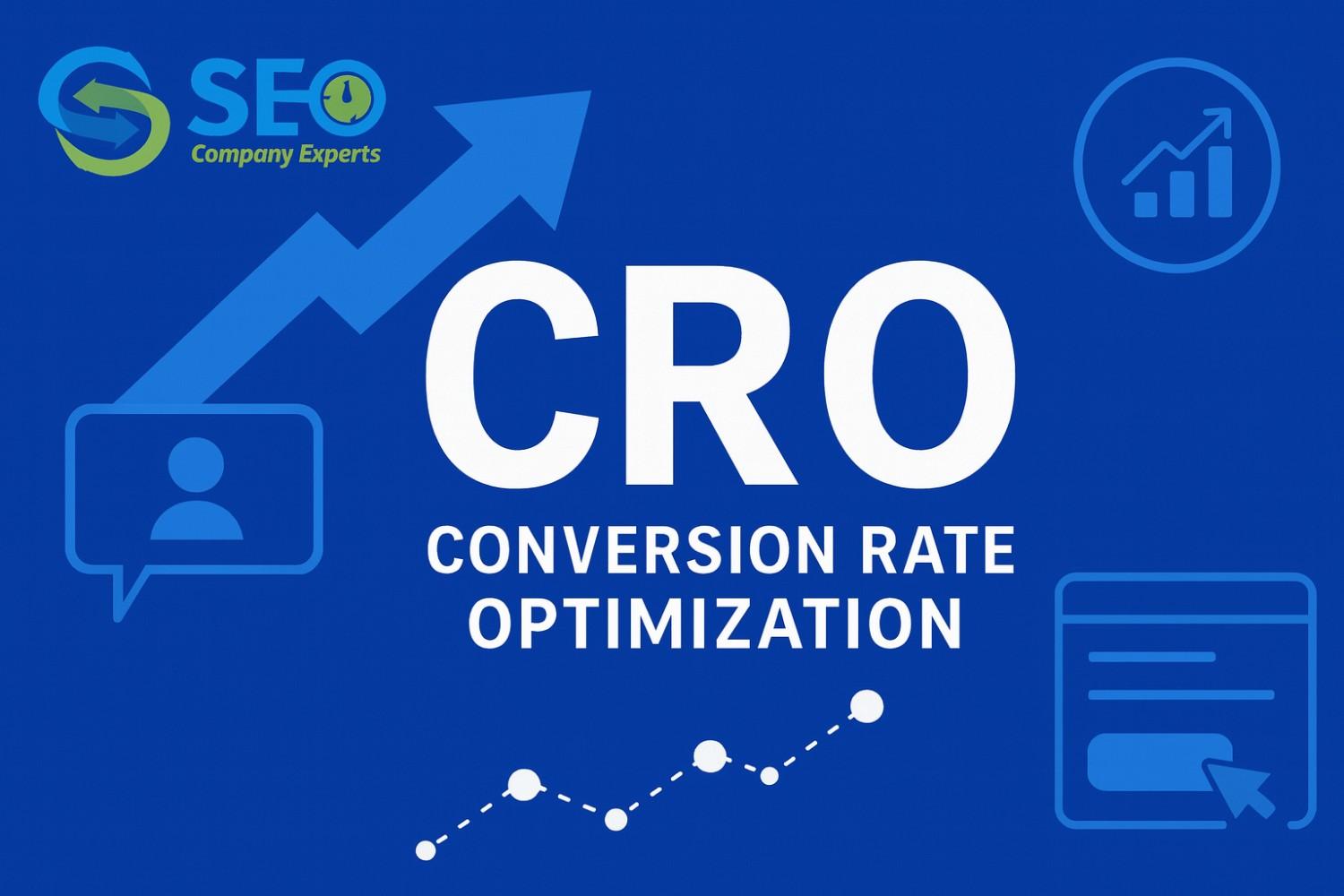
Conversion Rate Optimization commonly shortened to CRO, is the practice of improving your website or landing page so that a higher percentage of visitors take a desired action. That action could be buying a product, signing up for a newsletter, booking a demo, filling out a contact form, or any other goal that matters to your business.
Think of it this way: if 10,000 people visit your website every month but only 100 of them make a purchase, your conversion rate is 1%. CRO is the discipline focused on nudging that number higher, say, to 2% or 3% without necessarily increasing how many visitors you attract.
At its core, CRO is about understanding why visitors leave without converting and then systematically fixing those barriers. It blends data analysis, user psychology, design thinking, and structured experimentation.
Digital advertising costs have risen steeply over the past few years. Getting traffic to your website now costs more per click than at any point in history. That makes squeezing more value from existing traffic not just smart, it’s essential for sustainable growth.
Here’s the powerful reality: doubling your conversion rate from 1% to 2% is the equivalent of doubling your traffic but without doubling your marketing spend. That’s why savvy businesses are shifting budget from pure acquisition to conversion optimization.
Beyond revenue, good CRO practices improve user experience, reduce bounce rates, and increase customer satisfaction. When done right, everyone wins your business converts more, and your visitors find exactly what they were looking for more quickly.
Before you can improve your conversion rate, you need to know what it is. The formula is beautifully simple:
You’ll need to define what a ‘conversion’ means for your specific business. For an eCommerce store, it’s a complete purchase. For a SaaS company, it might be a free trial sign-up. For a local services business, it could be a phone call or form submission.
Once you have your baseline, you have a north star to optimize toward. Even a 0.5% improvement can mean thousands of extra pounds in monthly revenue for mid-sized businesses.
There’s no single magic trick that doubles conversions overnight. CRO is a collection of targeted improvements, each lifting performance slightly, that compound into significant gains over time. Here are the most impactful strategies to start with.
The most overlooked CRO fix is also the most fundamental: making your core offer crystal clear within the first few seconds of a visitor landing on your page. If people don’t immediately understand what you do, who it’s for, and why they should care, they’ll leave. Audit your headlines and hero section first.
Your CTA button is the literal gateway to conversion. Small changes button color, size, copy, placement can yield surprisingly large results. Replace vague copy like ‘Submit’ or ‘Click Here’ with specific, benefit-driven language like ‘Get My Free Quote’ or ‘Start Saving Today.’ Test one element at a time to understand what’s actually driving the change.
Page speed is one of the most under-appreciated CRO levers. Studies consistently show that for every additional second of page load time, conversion rates drop by roughly 7%. Use Google Page Speed Insights or GT matrix to identify performance bottlenecks, compress images, and leverage browser caching.
Humans are social creatures. We look to others to decide whether something is safe to try. Displaying genuine customer reviews, star ratings, case studies, client logos, or security badges directly on your key pages can dramatically reduce purchase anxiety and push hesitant visitors over the line.
Forms are conversion killers when they ask for too much, too soon. Only collect the information you absolutely need at the point of first contact. Research suggests that reducing a form from six fields to three can increase completions by up to 50%. You can gather additional information later in your customer journey.
A/B testing, also called split testing, is the backbone of any serious CRO programmer. It involves showing two versions of a page (A and B) to different segments of your audience simultaneously, then measuring which version produces more conversions. Over time, you build a compounding record of data-backed improvements.
With mobile devices now accounting for over 60% of global web traffic, a conversion experience that feels clunky on a smartphone is leaving serious money on the table. Test your entire funnel on multiple mobile devices, ensure touch targets are large enough, and simplify navigation for smaller screens.
Cart abandonment is one of the biggest challenges in eCommerce, with average abandonment rates hovering around 70%. Offering guest checkout, displaying clear shipping costs early, providing multiple payment options, and adding reassurance elements at the checkout stage can dramatically recover lost sales.
The most effective CRO practitioners follow a structured, repeatable process rather than making random guesses. Here’s the framework used by leading conversion rate optimization agencies worldwide:
The right tools make CRO significantly faster and more reliable. Here’s a breakdown of the key categories and leading options:
Google Analytics 4 (GA4) remains the go-to platform for tracking site behavior, funnel analysis, and conversion tracking. For deeper behavioral data, Mixpanel and Amplitude offer event-based tracking that gives granular insight into how users engage with your product or site.
Hotjar and Microsoft Clarity are the most popular tools here. They show you visual heatmaps of where users click, move, and scroll and let you watch recordings of real user sessions. There’s no faster way to spot confusing UX or broken elements quietly killing your conversion rate.
Google Optimize was sunsetted in 2023, pushing many teams toward VWO (Visual Website Optimizer), Optimizely, AB Tasty, or Convert. These platforms let you build and manage split tests without heavy developer involvement and provide robust statistical analysis tools.
Qualitative data is just as valuable as quantitative. Typeform, Survicate, and Hotjar’s survey feature let you ask visitors and customers directly what’s stopping them from converting, often revealing insights no amount of data analysis would surface.
One of the most common errors is ending a test too early. If your sample size is too small, any apparent ‘winner’ may simply be the result of random chance. Use a statistical significance calculator before calling a test, and aim for at least 95% confidence before implementing changes.
Changing five elements simultaneously makes it impossible to know which change drove the improvement (or the drop). Unless you’re running a formal multivariate test, keep your A/B tests focused on one primary variable.
Numbers tell you what is happening; qualitative research tells you why. Teams that rely purely on analytics without ever talking to customers or watching session recordings consistently miss the most important insights.
Just because a competitor has a particular design or funnel structure doesn’t mean it’s working for them. Your audience, product, and context are unique. Always validate ideas through testing rather than imitation.
Perhaps the biggest mistake of all is treating CRO as a campaign with a start and end date. The most successful businesses build a culture of continuous testing and it’s this relentless iteration, compounding over months and years, that creates truly transformative results.
Conversion Rate Optimization isn’t a silver bullet, and it won’t transform your business overnight. But applied consistently, with a rigorous evidence-based approach, it is one of the most reliably profitable investments a digital business can make. Conversion Rate Optimization isn’t a silver bullet, and it won’t transform your business overnight. But applied consistently, with a rigorous evidence-based approach, it is one of the most reliably profitable investments a digital business can make.
Start with your analytics. Identify your biggest leakage points. Form a hypothesis, run a test, learn from the result. Then do it again. That simple cycle, repeated month after month, is what separates the websites that struggle to convert from those that turn visitors into loyal customers with remarkable consistency.