
E-commerce SEO Services: The Complete Guide t...
Read More
You have a great product. Your store looks good. But when someone searches for what you sell, your website is nowhere on page one of Google. Sound familiar? You are not alone, and the good news is that this is exactly what e-commerce SEO is designed to fix.
Ecommerce SEO is the process of making your online store more visible in search engine results so that the right people people who are already looking for what you sell can actually find you. Unlike paid ads, where you pay for every single click, ecommerce SEO brings in organic traffic that keeps working for you long after you put in the initial effort.
In this guide, we are going to walk you through everything: what ecommerce SEO really means, why it matters more than most store owners realize, and how to build a strategy that actually gets your products ranking higher. Whether you are just starting out or you have been running your store for a while and want to grow, this guide is for you.
Quick fact worth knowing: Research from Backlink shows that only 0.63% of searchers ever click on page two of Google. The first organic result gets over 27% of all clicks. That is the gap that ecommerce SEO helps you close.
Let us start simple. Ecommerce SEO is the practice of optimizing your online store so that search engines like Google, Bing, and others can understand what you sell, find your pages easily, and rank them in front of people who are searching for those products.
When someone types “best running shoes under $100” or “handmade leather wallets for men” into Google, search engines scan thousands of web pages and decide which ones deserve to show up first. Your goal with ecommerce SEO is to be on that first page ideally at the top.
But here is what most store owners get wrong: they think SEO is only about keywords. Keywords are one piece of a bigger puzzle. According to Google’s official ecommerce best practices guide, helping Google understand your site structure, your product data, and how your pages are organized is just as important as the words you use.
Paid ads can get you to the top of Google tomorrow. But the moment you stop paying, the traffic stops. Ecommerce SEO, on the other hand, builds something more durable. A well-optimized product page or category page can keep bringing in customers for months or even years without any additional spend.
That does not mean SEO is free it takes time, effort, and often the help of a good ecommerce SEO agency. But the return on that investment tends to grow over time, which is the opposite of how paid ads work.
Good ecommerce SEO strategy is built on four things working together. Think of them as the four legs of a table if any one of them is missing, the whole thing becomes unstable.
Content is the foundation. Every product page, category page, and blog post on your site is an opportunity for Google to understand what you sell and match it to a search query. Good content for ecommerce SEO means:
One thing Google is very clear about: thin content hurts your rankings. If your product pages have a three-line description and nothing else, you are leaving a lot of ranking potential on the table. Write descriptions that genuinely help a shopper make a decision, and you will naturally improve your SEO at the same time.
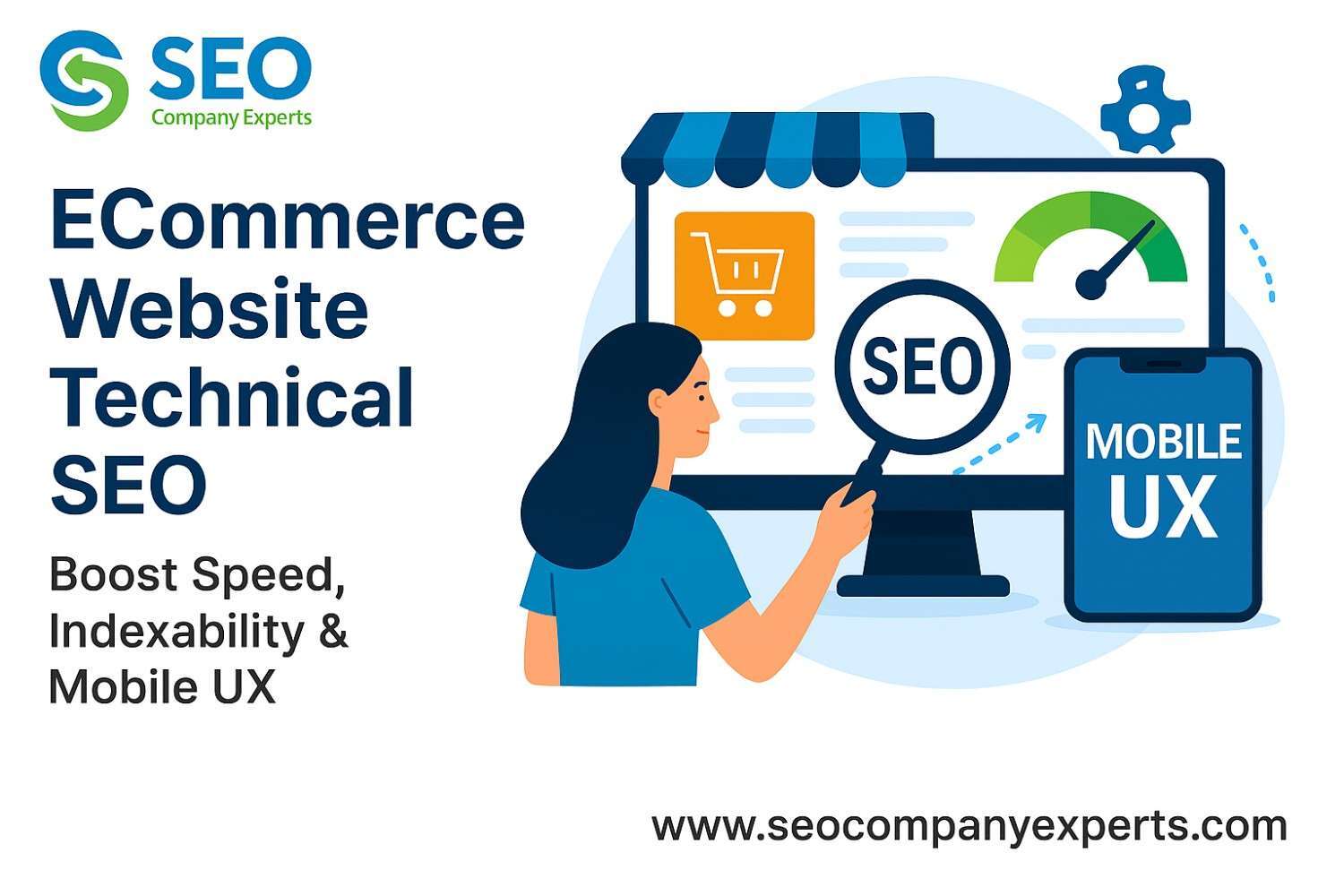
Technical SEO is everything about your website that visitors do not see but search engines absolutely do. This includes how fast your pages load, whether your site works on mobile devices, how your URLs are structured, and whether Google can crawl and index your pages without hitting dead ends.
As Shopify’s ecommerce SEO guide explains, some technical elements are handled automatically by your platform like sitemap generation and canonical tags but many still need to be set up and managed manually. These include page speed optimization, mobile-friendliness, HTTPS setup, and proper URL structure.
If you are not sure whether your technical setup is hurting your rankings, an audit from a professional ecommerce SEO agency can quickly surface the issues that are holding you back.
Google pays close attention to how users behave on your website. If someone clicks your page from search results and immediately bounces back, that is a signal that your page did not give them what they were looking for. If they stay, browse, and convert that is a strong positive signal.
This means that a good ecommerce SEO strategy is not separate from good website design. Clear navigation, fast load times, easy checkout, and readable product pages all of these improve user experience and, as a result, improve your search rankings too.
When other websites link to yours, Google treats those links as votes of confidence. The more high-quality, relevant sites that link to your store, the more authority your domain builds and the more Google trusts that you are a credible source.
Link building for ecommerce includes tactics like writing guest posts for relevant publications, getting your products reviewed by bloggers or journalists, and building partnerships with complementary brands. It is one of the slower parts of SEO, but also one of the most impactful over time.
Now that you understand the pillars, let us talk about how to actually build your ecommerce SEO strategy from the ground up. This is the process we use at SEO Company Experts and it is the same logic that separates stores that grow organically from stores that stay invisible.
Keyword research is how you figure out exactly what your potential customers are typing into Google. You are not guessing you are finding real data about real searches, and then making sure your store speaks that language.
For ecommerce, you need a mix of two types of keywords:
Start your keyword research by typing your main product into Google and looking at the autocomplete suggestions these are real searches people are doing. Then check the “People Also Ask” and “Related Searches” sections at the bottom of the results page. Tools like Google Keyword Planner (free) or Ahrefs (paid) can help you go deeper.
One important tip: do not ignore long-tail keywords. A keyword like “handmade silver earrings for sensitive skin” gets fewer searches than “silver earrings,” but the person searching it knows exactly what they want and they are much more likely to buy.
Your product pages are the heart of your ecommerce SEO. Each page should be built around one primary keyword and optimized across several elements:
Category pages are equally important and often underestimated. A well-optimized category page can rank for broader, higher-volume keywords that individual product pages cannot. Give your category pages real content: an introductory paragraph, a brief guide to choosing between products in that category, and clear internal links.
Before you invest heavily in content creation, make sure your technical foundation is solid. A few things to check and fix right away:
If you are running a Shopify store, many technical elements are handled automatically. But that does not mean you can ignore this area entirely. Working with a Shopify SEO expert or a dedicated ecommerce SEO agency can help you identify and fix issues that the platform does not handle on its own.
If you are selling physical products, connecting your store to Google Merchant Center is a step you cannot skip. As Google explains in their ecommerce best practices, submitting your product feed allows your products to appear in Google Shopping listings both paid and free. This means more surfaces where your products can show up, at no additional cost beyond the setup.
Make sure your product titles, descriptions, prices, and availability are accurate and regularly updated. Errors in your feed can get products disapproved and removed from listings.
A blog is not just a nice-to-have for ecommerce, it is a genuine SEO asset. Think about all the questions your customers have before they buy: how to choose the right size, how to compare two products, and how to care for what they purchase. Every one of those questions is a potential blog post that can rank in Google and bring in warm, ready-to-convert traffic.
Good ecommerce content strategy is not about publishing randomly. It is about researching the keywords your buyers are using at each stage of their journey, writing posts that genuinely answer their questions, and then connecting those posts back to your product pages with clear internal links and calls to action.
Link building is a long game but it is worth playing. Start by identifying publications, blogs, and websites in your niche that your customers read. Reach out with genuinely useful content they would want to share: a guide, a research piece, a product that deserves a review. Guest posting, product PR, and brand partnerships are all legitimate ways to build links that grow your domain authority over time.
Shopify is one of the most popular platforms for building an online store, and it comes with a number of built-in SEO features. But having the right platform is not the same as having a good SEO strategy that part still requires deliberate effort.
Here are a few things worth knowing if you are running a Shopify store and want to improve your organic rankings:
If you want the best SEO for Shopify, the honest answer is that you need a combination of the right platform settings, strong content, clean technical architecture, and consistent link building. A Shopify SEO expert can audit your store, identify what is holding you back, and build a plan that is specific to your products and market.
If you are considering working with an ecommerce SEO agency, it pays to know what to look for and what to watch out for. The right agency will not just give you a list of keywords to target. They will understand your business, your customers, and the competitive landscape of your industry before recommending a strategy.
Here is what genuinely good ecommerce SEO services should include:
Be cautious of agencies that promise first-page rankings in 30 days or guarantee specific results. SEO does not work that way and any agency that tells you otherwise is not being straight with you. Good ecommerce SEO services are honest about timelines and transparent about the work being done.
One of the best things about ecommerce SEO is that it is measurable. You do not have to guess whether it is working the data will tell you. Here are the key metrics to track:
This is the number of visitors coming to your store from unpaid search results. Track this in Google Analytics under Acquisition > Organic Search. If this number is growing month over month, your SEO is moving in the right direction.
Track how your target pages are ranking for their intended keywords. Google Search Console shows you which queries are bringing people to your site and what position you are ranking in. Tools like Ahrefs or SEMrush let you track specific keyword positions over time.
Even if you rank on page one, a poor meta title or description can mean very few people actually click through. Google Search Console shows your CTR for each page if it is low, test different titles and descriptions to improve it.
Traffic that does not convert is traffic that does not pay. Make sure you are tracking how many of your organic visitors actually complete a purchase. If your conversion rate is low despite good traffic, the issue might be with the page experience, not the SEO.
Ultimately, the measure of a successful ecommerce SEO strategy is whether it is contributing to your revenue. Connect Google Analytics to your store’s checkout to track organic search as a revenue channel this gives you the clearest picture of your SEO return on investment.
A lot of store owners put in effort on SEO and still do not see results often because of avoidable mistakes that quietly undermine everything else they are doing.
Not all ecommerce is the same, and your ecommerce SEO strategy should reflect who you are selling to.
If you are selling directly to consumers (B2C), your SEO content tends to focus on triggering a purchase decision. The keywords are often product-focused, the content is visual and concise, and the buyer journey can be very short sometimes just a few minutes from search to checkout.
If you are selling to businesses (B2B), the buyer journey is longer and more complex. Multiple people may be involved in the purchasing decision. Your content needs to be more educational and detailed, your keywords more specific and technical, and your ecommerce SEO services need to account for a much longer consideration period before a purchase is made.
The KPIs are different, too. B2C ecommerce SEO is measured heavily by traffic and average order value. B2B ecommerce SEO success is more often measured by lead quality, conversion rate, and customer lifetime value.
At SEO Company Experts, we have helped ecommerce businesses from brand new stores to established brands build organic search strategies that bring in real customers, not just clicks. We know that every store is different, which is why we do not sell cookie-cutter packages. We take the time to understand your products, your customers, and your competition before recommending anything.
If you are serious about growing through ecommerce SEO, we would love to have a real conversation about where you are and where you want to go. Schedule a direct call with our ecommerce SEO professionals and let us map out a strategy that is built around your goals not a generic template.
Whether you are just launching your first store or scaling an established one, the right ecommerce SEO strategy can change the trajectory of your business. Let us build it together.