
SEO for Plumbing Companies to Boost Your Loca...
Read More
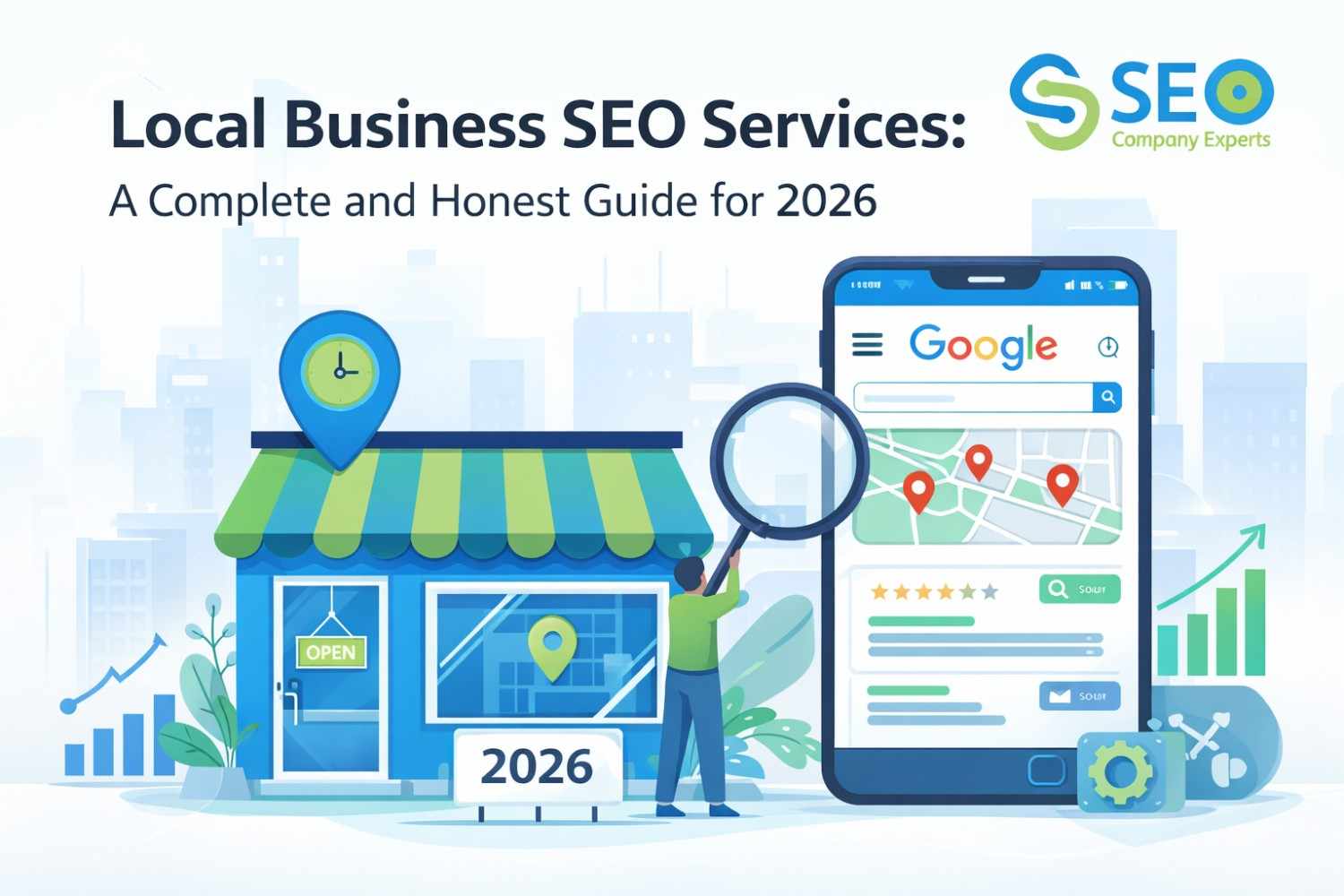
Well, to be at the top of the Google SERP of your targeted geographic boundaries in 2026 is really a mandatory thing. Maybe you were researching local SEO services, so to provide relevant and genuine information to you, we came up with this complete guide about local SEO services.
Think about the last time you searched “best dentist near me” or “plumber in [your city].” You clicked on one of the first few results and moved on. Your customers do the same thing every day. Local business SEO services exist to make sure your business is the one they click not your competitor down the street.
This guide covers everything: what local SEO actually is, who needs it, what the services include, how Google Maps rankings work, and how to pick a local SEO service provider you can actually trust. Every piece of information here is factual and backed by real data. Let us get into it.
Local business SEO services are a group of targeted steps that improve how visible your business is in local search results. When a nearby customer searches for what you sell or offer, these services work behind the scenes to make sure your business shows up ideally in the top positions.
Local search engine optimization service is not the same as general SEO. General SEO aims to improve your visibility on a national or even global level. Local SEO is focused entirely on a specific geographic area your city, your neighborhood, your service radius. The intent is different, the audience is different, and the tactics are different, too.
Here is a side-by-side look at how the two compare:
| Local SEO | General SEO | |
| Goal | Attract customers nearby | Reach broad national or global audiences |
| Keyword focus | “Emergency plumber Austin,” “salon near me” | “How to unclog a drain,” “hair care tips.” |
| Content focus | Location pages, service areas, local events | Industry guides, how-tos, informational articles |
| Best suited for | Brick-and-mortar stores, local service providers | eCommerce brands, online-only businesses |
Why does this matter in 2026 specifically? Because local search behavior has only gotten more intense. According to Business Wire, 84% of consumers search for local businesses online every single day. People are not driving around looking for storefronts they are searching first, then deciding. If your business is not showing up in those searches, that revenue is going elsewhere.
This is a question worth answering directly, because not every business needs the same type of SEO. So, who needs local SEO?
Any business that serves customers based on location needs local SEO. That includes restaurants, dental clinics, law firms, salons, pet groomers, electricians, plumbers, real estate agents, gyms, auto repair shops, and anyone else whose customers need to be physically near them to use the service.
Some clear signs that local SEO should be your priority right now:
If any of those sound familiar, investing in local SEO optimization for small businesses is not optional it is genuinely the most cost-effective thing you can do to grow.
Also: Read: Small Business Local SEO: Increase Traffic and Sales Locally
Before getting into the specific local business SEO services, it helps to understand what Google is actually doing when it decides which businesses appear in local results especially in Google Maps.
Google has explained its local ranking system publicly. It comes down to three things:
Relevance – Does your business actually match what someone searched for? This is determined by your business categories, the services you list, your website content, and how clearly everything aligns with the search query.
Distance – How physically close is your business to the person searching? Google uses the searcher’s real-time location or the location they specified in the query. One useful thing Google has noted: a business slightly farther away can still outrank a closer one if it is a clearly stronger match on relevance and prominence.
Prominence – How well-known and trusted is your business online? This includes your review volume and rating, how many websites link to you, how frequently your business is mentioned across the web, and how much quality information about you exists online.
Every local SEO solution you will read about profile optimization, reviews, citations, local links ties back to improving one or more of these three factors. Keep that in mind as you go through the services below.
A lot of agencies bundle things under vague labels. Here is a clear breakdown of what proper seo local services actually include and what each service is supposed to accomplish.
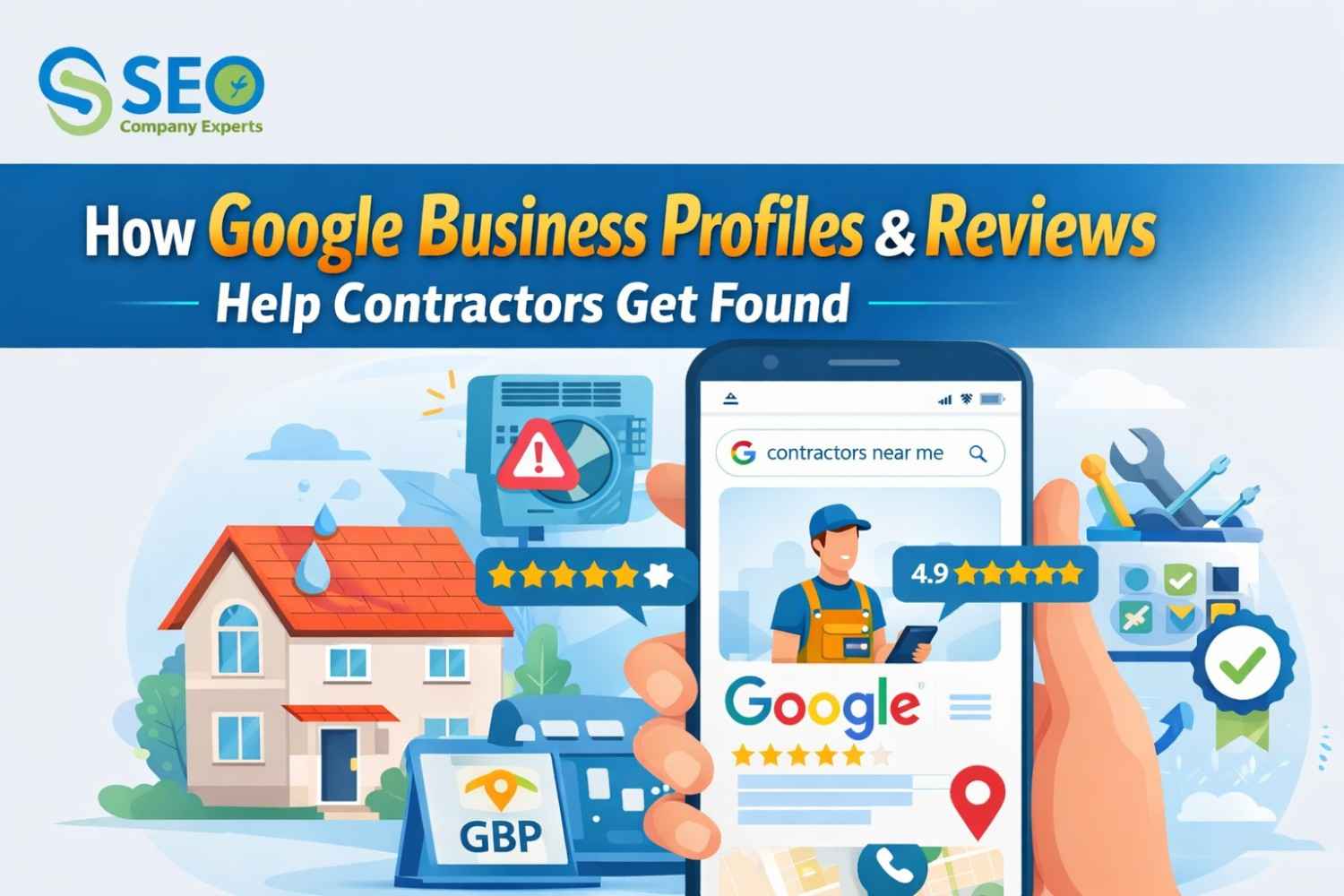
Your Google Business Profile is the single most impactful piece of local SEO. It is what appears in Google Maps, in the local pack at the top of search results, and increasingly in AI-generated local answers. Google has stated directly that a complete and accurate Business Profile can turn people who find you into customers.
A fully optimized profile means:
Most businesses fill in the basics and stop there. The businesses showing up consistently at the top are the ones that treat their profile as a living, maintained asset not a one-time setup.
Local keyword research is about understanding the exact phrases people in your area type when they are looking for businesses like yours. This is not guesswork there are real patterns to how people search locally.
Phrases like “emergency dentist open Sunday Chicago” or “affordable tax accountant near Midtown” represent very specific local intent. When you know what your customers are actually typing, you can make sure your website, your profile, and your content match those phrases naturally.
Google’s autocomplete feature, the “People Also Ask” section, and tools like Answer The Public are all useful for building a picture of local search behavior in your area.
Even though Google Maps gets a lot of attention, your website still plays a major role in local search engine optimization. Many people click through to your website after finding you locally to check prices, see your work, read about your team, and decide if they trust you.
On-page optimization for local searches includes:
Google’s Core Web Vitals measure real user experience loading speed, visual stability, and responsiveness. These are used in Google’s ranking systems, and a poor experience on mobile is a real disadvantage in local competition.
NAP stands for Name, Address, Phone Number. These three pieces of information need to be identical everywhere your business appears online your website, your Google profile, Yelp, Bing Places, Apple Maps, local directories, and anywhere else.
When your NAP is inconsistent a different phone number on an old directory, an abbreviated address on one site and a full one on another it creates confusion for search engines trying to verify your business. Fixing this is not glamorous work, but it is a foundational part of any credible local SEO solution.
Bright Local’s Local Consumer Review Survey 2026 found that 97% of consumers read online reviews when looking for local businesses. 41% say they always read reviews before making a decision. These are not small numbers reviews have become a standard part of how people decide who to trust locally.
The right way to build your review profile is also the only sustainable way: ask every customer for honest feedback, make it genuinely easy with a direct review link, and respond to every review positive or negative in a thoughtful way.
What you must never do is offer any kind of incentive for reviews. Google’s policy explicitly defines this as rating manipulation, and reviews earned this way can be removed entirely. The FTC updated its Endorsement Guides in 2023 and is focused on deceptive review practices. Yelp’s policy goes even further and asks that businesses not solicit reviews on their platform at all. Different platforms have different rules, so your team should not use one universal approach.
Responding to reviews also matters more than many businesses realize. Potential customers read responses. How you handle a negative review tells them as much about your business as the review itself.
A citation is any mention of your business name, address, and phone number on another website. Local business directories, review platforms, industry associations and local chamber of commerce sites all of these count.
Citations help search engines cross-reference your business details and confirm that you are a legitimate, real business at the location you claim. Getting listed in major directories Yelp, Apple Business Connect, Bing Places is an early and important step. Apple Business Connect is specifically worth mentioning because it controls how your business appears across Apple Maps, Siri, Wallet, and other Apple apps. It is free and still ignored by a surprising number of local businesses.
Links from other websites back to yours are a trust signal for search engines. For local SEO, what matters most is links from other local and relevant sources a local news article that quotes you, a community organization that lists you as a partner, a neighboring business whose website mentions you, a local event you sponsored.
These kinds of links tell Google that real, trusted local sources recognize your business as legitimate. They build prominence one of those three core ranking factors. This type of link building takes time because it grows from real relationships, but it is far more durable than any shortcut.
Local content creation means producing material that is genuinely useful or interesting to people in your area. A guide to a common local problem you solve. A post about a community event you participated in. A blog that answers the most common questions your customers ask before booking.
This kind of content serves two purposes. It gives search engines more context about where you operate and what you do. And it gives potential customers a reason to trust you before they even pick up the phone. Over time, local content compounds it keeps bringing in searches and building familiarity with your brand in the community.
A local SEO audit is a structured review of your entire local online presence. It checks your Google Business Profile for accuracy and completeness, reviews your website for technical issues and local relevance, looks at your citations for inconsistencies, and measures how you compare to your top local competitors.
The value of doing this regularly at least once a quarter is that things change. Competitors improve. Your own information gets outdated. Algorithm behavior shifts slightly. Catching problems early prevents a slow and quiet decline in visibility that many businesses do not notice until it has already cost them.
Good local SEO service provider relationships always include transparent reporting. Not just a monthly keyword ranking screenshot actual performance data that ties back to business outcomes.
What you should be tracking: how many times your Business Profile appeared in search, how many people called directly from it, how many asked for directions, how many clicked through to your website, and how your review count and rating trend over time. Google’s Business Profile performance section tracks all of this directly. Month over month, these numbers tell a much clearer story than rankings alone.
If you are running a small business and have not done much local SEO yet, here is a simple and realistic sequence to follow. This is not an exhaustive agency-level process it is what you can do yourself to get meaningful results:
These eight steps alone put you ahead of a large portion of local competitors who have never done this work properly.
Choosing the right local SEO service provider is where a lot of businesses go wrong. Here is what separates providers worth working with from ones that will waste your time and money.
They explain what they will do in plain language. A good provider can tell you specifically what work will happen in the first 30 days not in vague marketing language, but in concrete terms. If they cannot explain it simply, that is a problem.
They do not promise specific ranking positions. Google has stated publicly that no one can pay for or request a better local ranking. Any provider who guarantees a top-three spot for specific keywords is either wrong about how Google works or is not being straight with you.
They build a plan around your business, not a template. Local SEO for a dental clinic is genuinely different from local SEO for a landscaping company. The services overlap, but the keyword priorities, the content strategy, and the competitive landscape are different. A provider running the same checklist for everyone is not doing real local SEO.
They follow Google’s guidelines without exception. Tactics like virtual business addresses that are not actually staffed, keyword stuffing in business names, mass-produced city pages, or fake reviews are all policy violations. These tactics can get your listing suspended. A legitimate provider will not go near any of it.
They give you clear reports with real numbers. You should know what was done each month and what it produced. Not just rank changes actual business metrics like calls, clicks, and direction requests.
Starting with a local SEO consultation before signing a contract is always a smart move. Use it to ask direct questions and see how clearly they answer.
On cost: Bright Local’s own service documentation lists a range of roughly $799 to $1,299 per month per location, depending on the plan. This is a useful general reference. Two packages at the same price can differ enormously in quality and output, so always ask for a specific breakdown of what is included month to month.
Even businesses that are genuinely trying to do local SEO right can stay stuck because of a few common and fixable mistakes.
Business information that does not match across platforms. Your name, address, and phone number need to be written identically everywhere online. Pick one official format and apply it consistently including to old listings that may still have outdated information.
A Google Business Profile that violates Google’s guidelines. Service-area businesses cannot use a virtual office as their listed address unless someone is physically present there during stated business hours. Fake locations, misleading categories, and keyword-stuffed business names all risk profile suspension.
Incentivized or manipulated reviews. This consistently backfires. Google removes them, and the FTC’s updated guidance means the legal risk in the United States is real. The only sustainable approach is earned, genuine reviews.
Thin or duplicate location pages. Creating the same page for 30 different cities with just the city name changed is something Google has explicitly warned about for years. These doorway pages can actively hurt rankings. If you serve multiple cities, each page needs genuinely different content local details, local team information, local testimonials and real service-area context.
Ignoring website speed and mobile usability. Most local searches happen on phones. A website that is slow to load or painful to use on mobile loses customers before they even see your services. Google’s Core Web Vitals measure this directly.
Local SEO does not exist in isolation. It works best when it connects to your overall seo marketing approach and the other ways you reach your local audience.
The basic structure is this: local search captures people who are already in buying mode they are actively looking for what you offer right now. Broader marketing strategies social media presence, email communication, community involvement, word of mouth build awareness and bring people to the point of searching. That demand then gets captured through your local SEO.
Some businesses also invest in content that spreads organically through their local community. This is sometimes called epidemic marketing a term drawn from how information travels through networks, the way a useful recommendation spreads from one person to the next. For a local business, this means creating genuinely helpful content that people in your area want to share: a practical local guide, a useful checklist, a clear answer to a question your customers ask constantly. This kind of content supports your local visibility while also giving people a reason to remember and recommend you.
This approach aligns naturally with what Google’s own guidance emphasizes content made to help real people, not content made to manipulate rankings.
Some local SEO improvements produce results quickly. Fixing a wrong phone number, correcting your business category, or updating outdated hours removes confusion immediately and can improve visibility in searches you were missing.
Other results build gradually. Review volume, local authority, quality content these compound over months, not days. Real trust takes time to earn, and Google reflects that in how it rewards businesses that build steadily versus those that try to jump the line.
A realistic 90-day framework for local SEO optimization for small businesses:
Month one – Foundation. Audit and correct your Google Business Profile. Fix NAP inconsistencies across directories. Make sure your listing fully complies with Google’s guidelines. Start your review request process.
Month two – Relevance. Improve your core service pages. Add Local Business schema markup. Address any mobile speed or usability problems on your website. Begin local content creation.
Month three – Prominence. Keep building genuine reviews. Post regular updates and fresh photos to your Business Profile. Earn one or two real local links through community involvement or partnerships.
Track calls, direction requests, website visits from local searches, and review growth throughout. These numbers not keyword rankings are the real measure of whether your local SEO is working.
If you want to find obvious gaps in your current local SEO without hiring anyone, run through these checks:
Even fixing two or three things from this list can make a meaningful difference in how visible you are locally.
Local business SEO services are not complicated at their core. The goal is a consistent, honest, and accurate representation of your business across the web combined with a genuine effort to earn the trust of your local customers and the confidence of search engines.
The businesses that win in local search are not always the ones with the biggest budgets. They are the ones with complete profiles, consistent information, real reviews, useful websites, and a steady commitment to improving over time. That is available to any business willing to put in the work.
If you are considering bringing in a local SEO service provider or targeted seo services to handle this for you, start with a detailed local SEO consultation. At SEO Company Experts, we are always up for a discussion. So, if you are looking for a personalised and free quote, just click here, and our team will get back to you asap.