


Will AI Replace SEO? Not a Chance – Her...
Read More
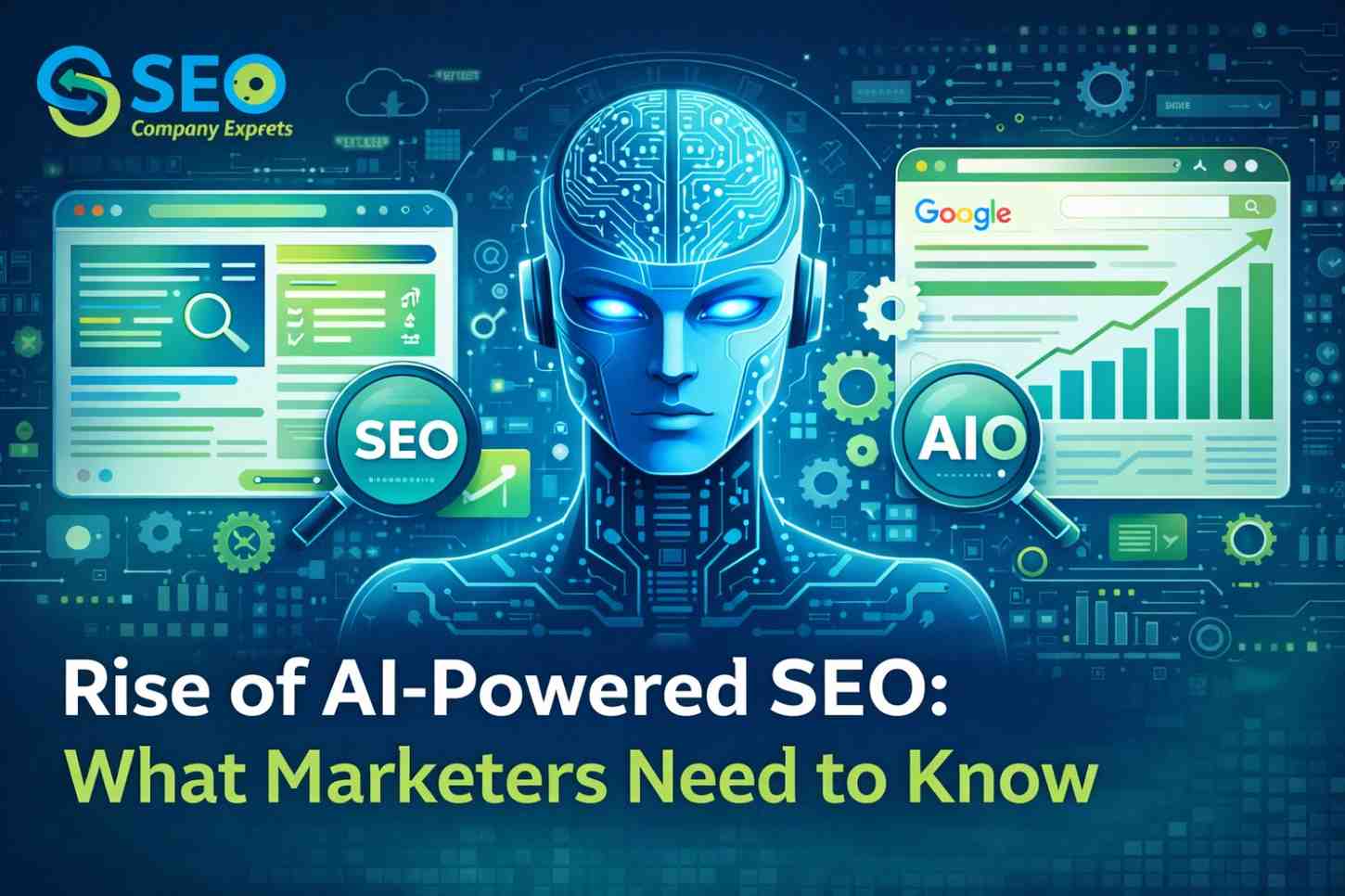
Artificial Intelligence is no longer a futuristic concept in digital marketing it is actively reshaping how search engines work and how marketers approach SEO. From Google’s AI-driven algorithms to predictive analytics and automated content optimisation, AI-powered SEO is redefining ranking strategies in 2026 and beyond. For marketers, understanding this shift is no longer optional; it is essential for staying visible, competitive, and profitable online.
AI-powered SEO refers to the use of artificial intelligence and machine learning technologies to analyze search data, understand user intent, automate optimization tasks, and improve website performance in search engine results. Unlike traditional SEO, which relies heavily on manual research and static rules, AI-driven SEO continuously learns from data and adapts strategies in real time.
Search engines now use AI to interpret search queries, evaluate content quality, and personalize results. At the same time, marketers use AI tools to automate keyword research, content optimization, technical SEO audits, and performance forecasting.
The evolution of search behavior and search engine algorithms has made AI indispensable. Users now search using natural language, voice queries, and conversational prompts. Search engines respond by prioritizing intent, relevance, and experience over simple keyword matching.
AI enables search engines to:
AI provides the ability to process massive datasets quickly, identify patterns, and make smarter optimization decisions with greater accuracy.
Search engines rely heavily on AI and machine learning models to rank content. Google’s AI systems interpret meaning, detect spam, evaluate experience signals, and refine rankings continuously.
AI helps search engines understand the true intent behind queries, whether informational, navigational, commercial, or transactional. This means content must address user needs clearly and comprehensively rather than simply repeating keywords.
AI systems analyze content depth, structure, readability, topical authority, and originality to determine true value for users. Thin, repetitive, or unhelpful content is filtered out, while well-researched, user-focused content created through strategic Content marketing services is consistently rewarded with higher visibility, stronger engagement, and improved search rankings.
AI evaluates metrics such as dwell time, bounce rate, page speed, mobile usability, and Core Web Vitals. Websites that deliver smooth, fast, and intuitive experiences gain a ranking advantage.
Understanding the core technologies behind AI-powered SEO helps marketers make better strategic decisions.
Machine learning allows systems to learn from data patterns without explicit programming. In SEO, it helps predict ranking factors, identify optimization opportunities, and refine content strategies over time.
NLP enables search engines to understand language the way humans do. It analyzes context, synonyms, sentiment, and relationships between words, making keyword stuffing obsolete.
Predictive models analyze historical and real-time data to forecast traffic trends, ranking opportunities, and conversion outcomes. Marketers can plan SEO strategies proactively instead of reacting to changes.
AI-powered tools automate time-consuming tasks such as keyword clustering, content audits, technical issue detection, and performance monitoring, allowing marketers to focus on strategy and creativity.
The Rise of AI-powered SEO offers significant advantages for businesses and digital marketers.
AI identifies high-intent, long-tail keywords by analyzing user behavior, search patterns, and competitive gaps. This leads to more qualified traffic and better conversion rates.
AI-driven audits detect technical SEO issues such as crawl errors, broken links, slow pages, and indexing problems with higher accuracy and speed than manual methods.
AI helps optimize content structure, readability, headings, internal links, and semantic relevance across large websites without sacrificing quality.
By automating repetitive tasks and improving targeting accuracy, AI-powered SEO reduces wasted effort and delivers higher returns on marketing investment.
Content remains the foundation of SEO, but AI has changed how content is created and optimized.
AI tools analyze top-ranking pages, identify content gaps, and recommend topics that align with user intent. This ensures content is comprehensive and competitive from the start.
AI enables personalized content experiences based on user behavior, location, device, and search history. Personalized content improves engagement and search performance.
While AI can assist with content creation, human expertise is essential for accuracy, originality, and brand voice. Search engines increasingly prioritize experience, expertise, and trust signals that only humans can authentically provide.
AI has enhanced Technical SEO by simplifying complex data analysis. An AI-powered Technical SEO Audit quickly identifies issues and optimization opportunities to improve search performance.
AI tools identify crawl budget issues, orphan pages, and indexing errors, ensuring search engines can access and understand website content efficiently.
AI analyzes performance metrics and recommends optimizations for faster load times, better mobile performance, and improved Core Web Vitals.
AI assists in implementing and validating structured data, helping search engines better interpret content and improve visibility in rich results.
AI-powered SEO is closely connected to emerging search formats.
With the rise of voice assistants, AI-driven SEO focuses on conversational keywords, question-based queries, and featured snippet optimization.
AI enables search engines to interpret images and videos. Optimizing visual content with descriptive metadata, high quality, and contextual relevance is now critical.
Despite its benefits, AI-powered SEO Services come with challenges marketers must manage carefully.
Relying too heavily on automation can lead to generic content, loss of brand identity, and missed strategic opportunities.
Search engines penalize manipulative or low-quality AI-generated content. Marketers must ensure transparency, originality, and user value.
AI-driven algorithms evolve rapidly. Marketers must stay updated and continuously refine strategies to avoid sudden ranking drops.
To succeed in the AI-driven SEO landscape, marketers should adopt a balanced and future-ready approach.
Create content that genuinely solves problems, answers questions, and delivers value. User-first SEO aligns naturally with AI-driven ranking systems.
Accurate data fuels effective AI insights. Use reliable analytics, SEO platforms, and performance monitoring tools.
AI enhances efficiency, but human creativity, strategy, and judgment remain irreplaceable. The strongest SEO strategies blend both.
Consistently publish in-depth, well-structured content within your niche to establish authority and credibility with both users and search engines.
AI-powered SEO will continue to evolve toward greater personalization, predictive optimization, and real-time adaptability. Search engines will become even better at understanding intent, evaluating experience, and rewarding authentic value.
For marketers, the future belongs to those who embrace AI as a strategic partner rather than a shortcut. Those who combine technology, creativity, and user-focused thinking will dominate search results in the years ahead.
The rise of AI-powered SEO marks a fundamental shift in how search engines rank content and how marketers approach optimization. By understanding AI technologies, adapting strategies, and prioritizing user experience, marketers can turn this transformation into a powerful competitive advantage.