Winning Ecommerce SEO Strategies for Your Onl...
Read More
Running an online store in 2026 is tough. The market is crowded, and every day, thousands of new stores go live. So here is the real question how do customers find you and not your competitor?
The answer is simple. Most buyers start on Google. They type in what they want, and they click one of the first few results. If your store is not on page one, those buyers go to someone else. That is the problem that e-commerce SEO services solve.
In this guide, we will walk you through everything you need to know about e-commerce SEO what it is, how it works, what most stores get wrong, and what actually moves the needle. No fluff, just the real stuff.
E-commerce SEO services are a set of strategies used to help online stores rank higher in search engines like Google. The goal is to make your store visible when people search for products you sell.
These services cover everything from fixing technical issues on your website to writing better product descriptions. They also include building links from other websites and creating content that brings in buyers.
When done right, ecommerce SEO services bring in a steady stream of organic traffic — people who are already searching for what you sell. And that is far more valuable than paid traffic, because these buyers come to you ready to purchase.
Most SEO focuses on getting blogs or service pages to rank. E-commerce SEO is different. It focuses on product pages, category pages, and the whole shopping experience.
A regular SEO strategy might target someone who wants to learn something. An e-commerce SEO strategy targets someone who wants to buy something. That shift in intent changes everything the keywords you use, the content you write, and the way you structure your pages.
Paid ads stop the moment you stop paying. SEO keeps working even when you are not. That is the biggest reason store owners invest in e-commerce SEO services.
Here is what good SEO does for your store:
The truth is, customers who find you through search are more likely to convert. They were already looking for what you sell. That is the power of a smart e-commerce SEO strategy.
Keyword research is the foundation of any e-commerce SEO strategy. You need to know exactly what your buyers are typing into Google before you can show up in those searches.
Here is something most guides skip: not all keywords are equal. Some keywords show that someone is just browsing. Others show that someone is ready to buy right now. You need both but in the right places.
Transactional keywords are your biggest priority. These are searches like “buy leather wallet online” or “order noise-cancelling headphones.” The person typing this is ready to spend money.
Commercial intent keywords are the next step up. These include searches like “best running shoes for flat feet” or “top wireless earbuds under $100.” The buyer is comparing options and will likely purchase soon.
Long-tail keywords deserve special attention in e-commerce SEO. A phrase like “waterproof hiking boots for wide feet” has lower search volume but very high buying intent. These keywords are easier to rank for and often convert better.
Informational keywords, like “how to choose running shoes,” bring people in at the top of the funnel. You can target these with blog content and guide them toward your products.
Your product pages are where sales happen. They also need to rank in Google for anyone can find them. Most stores fail at both because they copy the manufacturer’s description and call it done.
That is one of the biggest SEO mistakes you can make. Duplicate content tells Google you have nothing unique to offer. It hurts your rankings and makes it harder for buyers to trust your page.
A good product page does two things: it ranks in Google, and it convinces the buyer to add to cart. Here is what it needs:
Schema markup is something a lot of competitors skip. When you add product schema to your pages, Google can show your price, rating, and stock availability directly in the search results. That makes your listing stand out and gets more clicks even if you are not in position one.
Most store owners spend all their time on product pages and completely ignore category pages. That is a big missed opportunity.
Category pages target broader keywords with higher search volumes. Someone searching “women’s running shoes” is looking at a category, not a specific product. If your category page ranks for that term, you catch every buyer at that stage.
To make category pages work for SEO, you need a short but helpful introductory paragraph that naturally includes your main keyword. You also need clean navigation, good filtering, and internal links to your top product pages. It sounds simple, but very few stores do this well.
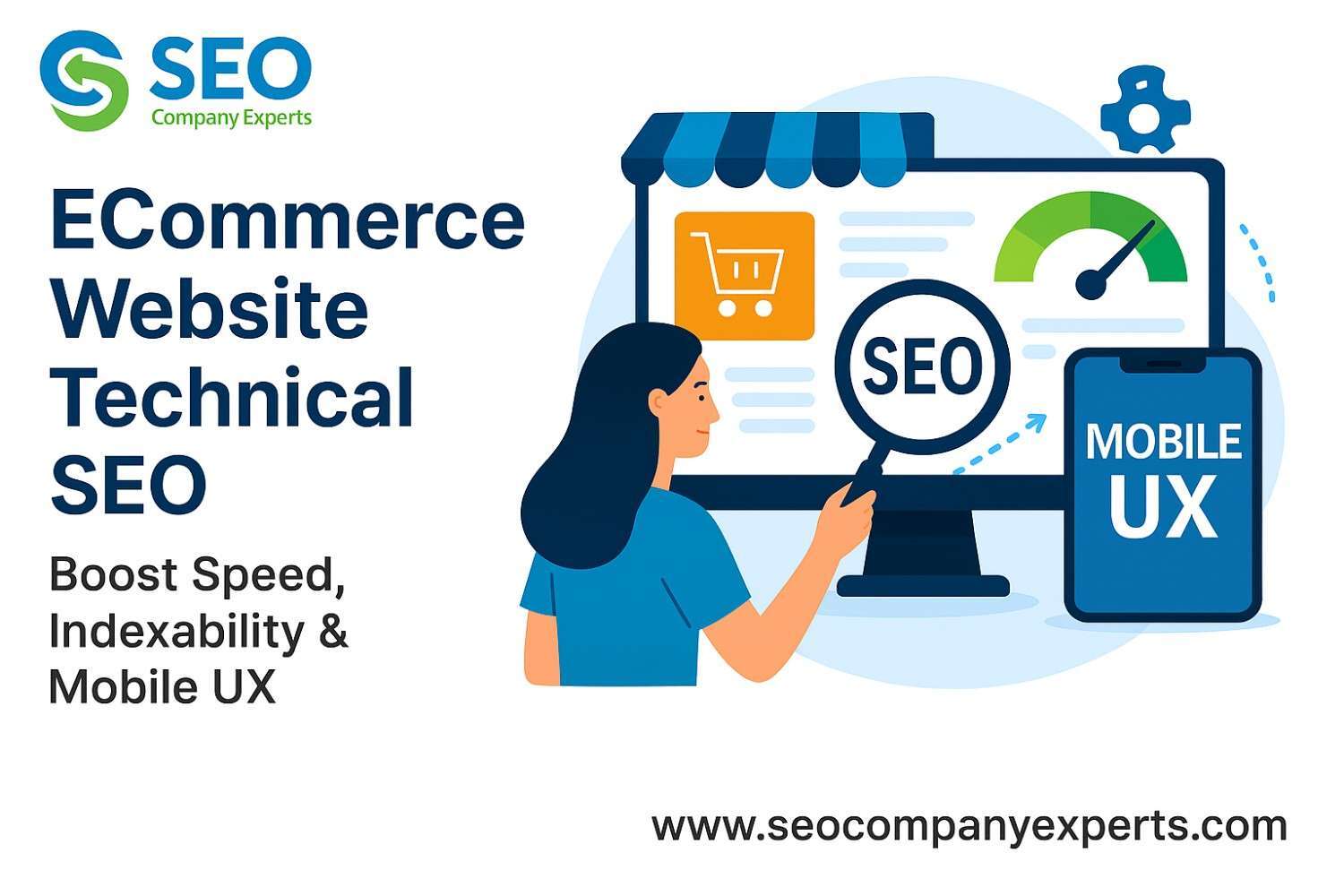
You can have the best product descriptions in the world, but if Google cannot crawl your website properly, none of it matters. Technical SEO makes sure the search engine can actually find, read, and rank your pages.
E-commerce websites have unique technical challenges that smaller blogs do not deal with. Here are the biggest ones:
When your store creates separate URLs for product filters like size, color, or price range it generates hundreds of near-identical pages. Google sees these as duplicate content. The fix is to use canonical tags or to block those filter URLs from being indexed. Most stores never address this, and it silently hurts their rankings.
Google uses Core Web Vitals as a ranking factor. This measures how fast your page loads, how stable the layout is, and how quickly it responds to user input. A slow store loses both rankings and customers studies show that even a one-second delay in page load can reduce conversions by 7%.
Compressing images, using a CDN, and reducing unnecessary code are all things that ecommerce SEO services address in a technical audit.
Google only crawls a certain number of pages on your site per day. For large stores with thousands of products, this crawl budget matters a lot. If Google wastes its crawl budget on out-of-stock pages, duplicate filter pages, or low-quality URLs, your important product pages get crawled less often and updated rankings take longer to show up.
Managing crawl budget is a technical SEO task that most competitors skip entirely. It is one of the things our e-commerce SEO services specifically address for stores with large catalogues.
A blog is not just for lifestyle brands. It is one of the most effective tools for e-commerce SEO. Here is why: buyers do not always search for a specific product first. Sometimes they search for a problem or a question.
If you sell outdoor gear, someone might search “how to choose a camping tent” before they ever search “buy a 4-person camping tent.” A well-written buying guide can capture them at that early stage and guide them straight to your product pages.
The best types of content for e-commerce stores include product comparison articles, how-to guides, gift guides, and seasonal round-ups. Each piece of content is another entry point for buyers to discover your store through search.
Backlinks are links from other websites pointing to yours. Google treats them like votes of confidence. The more quality backlinks you have, the more Google trusts your store.
For e-commerce, link building is different from what you see in the generic SEO world. Here is what actually works:
One high-quality backlink from a trusted publication in your niche is worth more than a hundred low-quality links from random directories. Quality wins every time.
Even good stores make these mistakes. Knowing what they are helps you avoid them or fix them if they are already hurting your rankings.
If you sell a shirt in five colors and each color has its own URL with the same description, you have duplicate content. Google will only rank one version, and the others will be ignored. The fix is to use canonical tags pointing to the main product, or to write slightly different descriptions for each variant.
When a product goes out of stock, many stores either delete the page or show a 404 error. Both of these are bad for SEO. If your page was ranking and you delete it, you lose all that ranking power. Instead, keep the page live, show related products, and update it when the item comes back in stock.
Internal links help Google understand how your pages connect. They also help pass authority from stronger pages to weaker ones. A simple rule: link your category pages to your best-selling products, and link your blog posts to relevant product and category pages. Most stores skip this completely.
This is one of the most common questions we get. The honest answer is that it depends on how competitive your niche is, how old your domain is, and the current state of your website.
In general, most stores start seeing noticeable improvements within 3 to 6 months of implementing a proper E-commerce SEO Strategies. Highly competitive niches like electronics or fashion may take longer. Less competitive niches can see results sooner.
The important thing to understand is that SEO builds over time. Every improvement you make adds up. After 12 months of consistent work, the results are usually significant and they keep growing. That is the compounding effect of SEO that paid ads cannot replicate.
When you work with a professional SEO team, the process starts with a thorough audit of your existing website. This audit looks at your technical setup, your current keyword rankings, your content, and your backlink profile.
From there, an e-commerce SEO strategy is built around your specific store, your target audience, and your competition. Every store is different, and a strategy that works for a fashion brand will not automatically work for a home appliance store.
Good e-commerce SEO services include regular reporting so you can see exactly what is happening. You should know which keywords you are ranking for, how your traffic is growing, and what work is being done each month. Transparency matters.
Search is changing fast. Here are a few trends that are directly affecting how e-commerce SEO works right now.
Google now shows AI-generated answers and featured snippets at the very top of search results. These sections pull from well-structured, clearly written content. If your pages answer common buyer questions in a direct way, they have a real shot at appearing in these high-visibility spots which means more clicks without needing to be in position one.
More people are using voice search to shop. Voice queries are longer and more conversational. Instead of typing “wireless headphones,” someone might say, “What are the best wireless headphones for working out?” Optimizing for these natural language phrases gives your store an edge.
Tools like Google Lens let users search with images instead of words. If you sell visually appealing products, optimizing your images with proper file names, alt text, and structured data helps your products appear in visual search results. This is still a largely untapped area of e-commerce SEO.
Growing an online store in 2026 takes more than a good product. You need people to find it. That is exactly what e-commerce SEO services are built to do.
From keyword research to technical fixes, from product page optimization to content that ranks every piece works together to bring the right buyers to your store, consistently.
SEO is not an overnight fix. But it is one of the best long-term investments you can make in your store’s growth. The stores that invest in a strong e-commerce SEO strategy today are the ones that will dominate their niche in the years ahead.
If you want to see where your store stands and what it would take to grow your organic traffic, we are happy to take a look. You can also get a free quote just click here.