


7 Best Link-Building Services To Boost Busine...
Read More
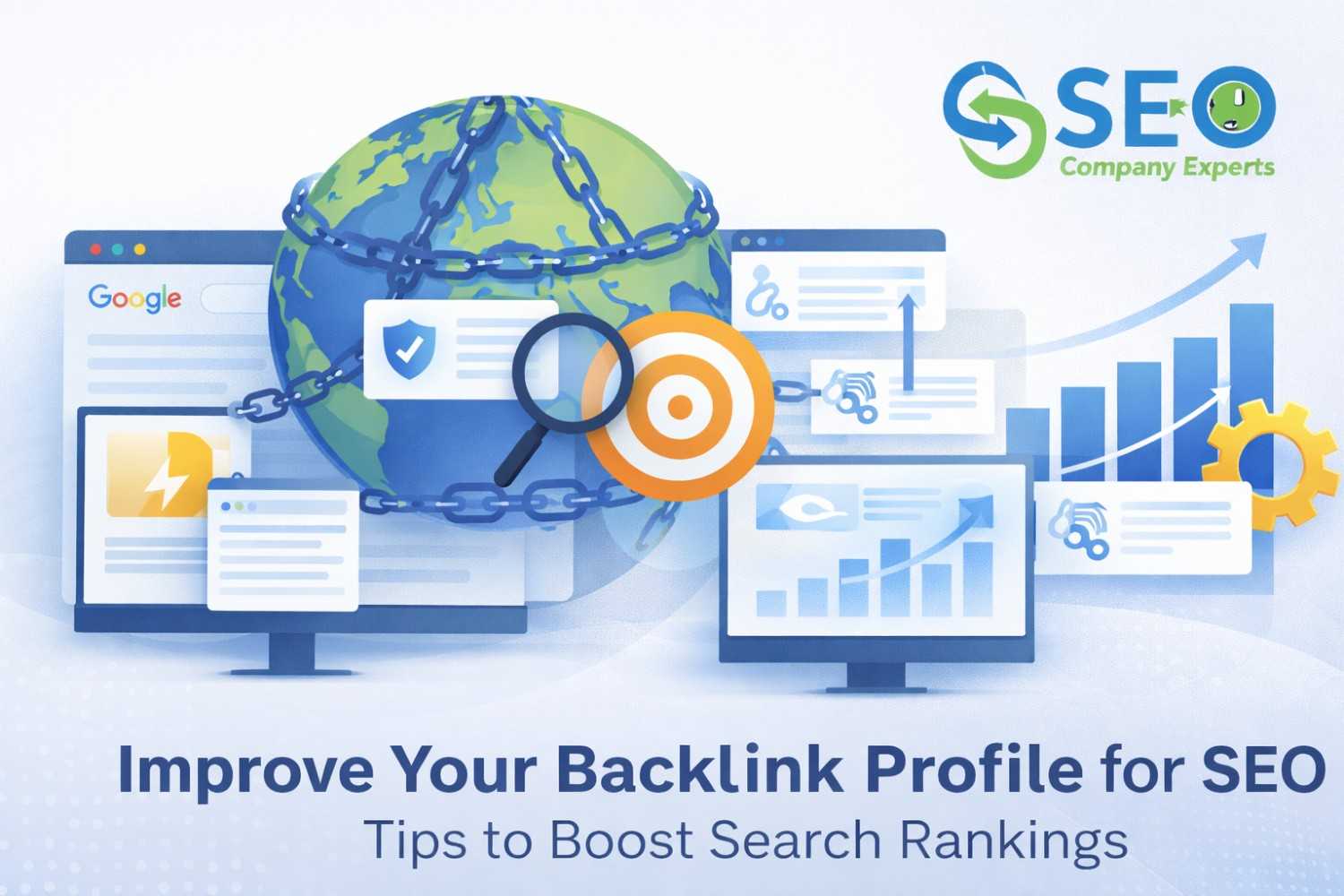
Your website can have flawless on-page SEO, lightning-fast load times, and compelling content yet still struggle to rank on the first page of Google. The missing piece for most websites is a strong backlink profile for SEO. In 2025, backlinks remain one of Google’s top three ranking factors, and the gap between sites with authoritative link profiles and those without continues to grow every month.
The hard truth? 95% of all web pages have zero backlinks. Meanwhile, the #1 result on Google has 3.8 times more backlinks than pages ranking in positions 2 through 10. Whether your backlink profile is non-existent, full of toxic links, or simply underperforming, this guide covers everything you need from running a proper SEO backlink audit to building white hat links to boost search rankings and drive sustainable organic traffic growth.
A backlink profile is the complete collection of external links pointing to your website, encompassing link volume, domain authority, anchor text variety, and dofollow/nofollow ratios. These signals collectively tell Google how trustworthy and authoritative your site is. Optimizing your backlink profile is an ongoing process building quality links, removing harmful ones, and monitoring referring domain growth making it one of the most durable competitive advantages in SEO.
Google’s algorithm uses backlinks as trust signals, treating each link as a vote of confidence from one website to another. These PageRank signals measure both the quantity and quality of those votes. A single link from an authoritative site like Forbes or HubSpot carries significantly more weight than hundreds of links from low-quality directories or link farms.
According to Search Engine Journal, high-quality content, page experience, and backlinks are Google’s top three ranking factors. As AI-powered search (including Google’s AI Overviews) becomes more prevalent, 73.2% of SEO professionals now believe backlinks also influence visibility in AI search results making your link profile even more critical in 2025.
Before improving your backlink profile, you need to know what a strong one looks like. Track these core metrics regularly:
An SEO backlink audit is the essential first step in any backlink profile optimization strategy. It identifies which links are supporting your rankings, which are hurting them, and where your best link-building opportunities exist. The process involves crawling your full backlink database, scoring links by quality and relevance, flagging toxic sources, and benchmarking against top competitors. Audits should be conducted quarterly or immediately after any major Google algorithm update because skipping this step is one of the most common reasons websites fail to improve despite investing in new link building.
Choosing the right backlink profile analysis tools makes auditing faster, more accurate, and actionable. Here are the leading platforms trusted by SEO professionals:
Ahrefs is the most widely used SEO tool for backlink analysis, preferred by 59.1% of SEO professionals (Editorial.link, 2026). Its Site Explorer gives you a complete backlink database, DR scoring, toxicity indicators, and a powerful competitor gap analysis tool. For most professionals, Ahrefs is the gold standard for backlink profile analysis.
SEMrush offers automated toxicity scoring, one-click disavow list generation, and built-in outreach management. It is especially useful for agencies managing multiple client profiles and for tracking link velocity over time.
Google Search Console (GSC) is the most authoritative free source for the links Google actually recognises pointing to your site. Always cross-reference third-party tool data with GSC to get an accurate picture of your real-world backlink profile.
Toxic backlinks come from penalised, irrelevant, or low-authority domains. Common red flags include links from link farms, private blog networks (PBNs), adult or gambling sites unrelated to your niche, and sites with a Spam Score above 30%. Use your backlink tool to filter by toxicity rating, export the suspicious links, verify them manually, and compile your disavow list.
Key warning signs of a toxic backlink:
Building a strong backlink profile for SEO requires consistent, ethical, and strategic link acquisition. White hat link building means earning backlinks through genuine value great content, real relationships, and digital visibility rather than manipulation, paid schemes, or link networks. In 2025, 93.8% of link builders prioritise quality over quantity (Authority Hacker), making white hat strategies the only sustainable long-term approach.
A well-planned guest posting strategy remains one of the most effective ways to earn authoritative backlinks. Guest posting is used by 64.9% of marketers as a primary link-building tactic (Authority Hacker). The key is quality over quantity: target publications with genuine editorial standards, real audiences, and strong domain authority relevant to your industry.
Pitch topics that genuinely serve the host publication’s readers, not just your own link goals. Vary your anchor text naturally, avoid over-optimised exact-match keywords, and aim for 2–4 high-quality placements per month. Consistency in guest posting builds your referring domain count steadily over 3–6 months.
Digital PR has become the #1 link-building tactic in 2025, rated the most effective method by 48.6% of SEO professionals (Editorial.link, 2026). By producing original research, data studies, expert roundups, or newsworthy campaigns, you can earn editorial backlinks from major publications without paid outreach. Long-form content exceeding 3,000 words generates 3.5 times more backlinks than shorter articles, making content depth a powerful natural link magnet.
Broken link building involves finding dead links on high-authority websites and offering your relevant content as a replacement. Tools like Ahrefs’ Site Explorer make it easy to identify broken external links on high-DR pages. This approach delivers genuine value to the webmaster and earns you a contextual, editorial backlink a true win-win for backlink profile optimization.
Dofollow links pass full PageRank authority from the linking page to your site and have the most direct impact on search rankings. Nofollow links carry the rel=”nofollow” attribute, which Google originally used as a directive to ignore those links for PageRank. Since 2019, Google treats nofollow as a hint rather than a strict rule meaning some nofollow links from high-authority platforms can still carry SEO value.
A natural backlink profile contains both types. A profile made up exclusively of dofollow links looks engineered and unnatural to Google’s algorithms. Nofollow links from high-traffic platforms like Wikipedia, Reddit, Quora, and major news sites contribute to brand authority signals that indirectly support organic rankings.
The ratio of dofollow to nofollow links matters for PageRank signals. Most SEO professionals aim for approximately 60–70% dofollow and 30–40% nofollow, which mirrors the natural link distribution of organically grown authority sites. Since 2019, Google also recognises the rel=”sponsored” attribute for paid links and rel=”ugc” for user-generated content links use these correctly to stay compliant with Google’s link spam guidelines.
Anchor text optimization is one of the most powerful and most commonly misused aspects of link building. The clickable text of a backlink sends strong relevance signals to Google about what topic your page covers and what queries it should rank for. Over-optimising anchor text with exact-match keywords is a well-known trigger for Google Penguin penalties.
Research from Ahrefs confirms that exact-match anchor text backlinks are no more effective than non-exact match anchors what matters is a natural, diverse distribution. Here is the recommended anchor text split for a healthy profile:
If your SEO backlink audit uncovers links that are genuinely harmful and cannot be removed through outreach, Google’s Disavow Tool allows you to formally tell Google to ignore those links when assessing your site. This is a last resort incorrect use can accidentally disavow valuable links and harm your rankings.
Sustained organic traffic growth is the ultimate reward of a well-managed backlink strategy. Once you have cleaned up toxic links and established an active link-building cadence, focus shifts to growing your referring domain base at a steady, natural pace. Most top-ranking pages gain 5–14% more followed links per month (Backlinko) this consistent velocity is a key signal of a trustworthy, growing authority site.
Link diversity means earning backlinks from a wide variety of source types editorial articles, resource pages, podcast mentions, video descriptions, forum citations, and directory listings. Over-reliance on a single link type creates an unnatural pattern. Aim to expand your referring domains continuously; the number of unique referring domains is the single factor with the highest correlation to Google rankings (Backlinko, 2025).
Set up automated alerts in Ahrefs or SEMrush to notify you when you gain or lose backlinks. A sudden drop in referring domains can signal a competitor’s negative SEO campaign, a Google algorithm update, or a technical issue causing link signals to be lost. Conduct a full backlink audit quarterly, refresh your disavow file as needed, and benchmark your growth against your top three organic competitors.
Treating your backlink profile as a living asset one that needs regular maintenance, strategic growth, and ongoing protection is what separates websites that plateau from those that compound their authority and rankings year after year.
A strong backlink profile SEO strategy remains one of the most powerful ways to boost search rankings and drive sustainable organic traffic growth. The gap between websites with quality backlinks and those without continues to grow, making backlink profile optimization essential for long-term success. By conducting a thorough SEO backlink audit, removing toxic links, and implementing white hat link building techniques like anchor text optimization and guest posting strategy, you can turn your backlink profile into a high-performing SEO asset that fuels consistent visibility and growth.